A garden fountain can do more than fill an empty corner. Moving water adds sound, reflects light and gives a patio or planting area a clear focal point. The best fountain is not necessarily the largest one: it is the design that fits the space, keeps splashing under control and can be maintained without turning every cleaning day into a project.
This guide explains the main types of garden fountains, how to choose a pump and nozzle, and what to plan before installation. It is written for recirculating water features, which reuse water from a basin or hidden reservoir rather than running continuously from the mains supply.
Decide What the Fountain Should Do
Begin with the experience you want. A quiet wall fountain can soften traffic noise beside a small terrace. A low bubbling feature suits a contemplative garden, while a taller jet makes a stronger visual statement in an open lawn or formal courtyard. If the fountain will be viewed from indoors, check the sightline from the window as well as from the garden path.
Scale matters. A broad, multi-tiered fountain can overwhelm a compact yard, but a tiny feature may disappear in a large planting. Measure the available area and allow extra room for access, cleaning and splash. Wind can carry fine spray surprisingly far, so avoid placing a tall jet beside doors, seating, delicate finishes or a path that could become slippery.
Choose the Right Location
A stable, level base is essential. Even a modest basin becomes heavy when filled: one litre of water weighs about one kilogram. Use a base that can support the complete filled weight without settling or tilting. For a large masonry or cast-stone fountain, ask the supplier whether a reinforced pad is required.
Moderate shade can reduce evaporation and slow algae growth, but dense tree cover creates a different problem: falling leaves, blossom and seeds can clog the intake. Leave enough working space to remove the pump and reach the filter. Before digging, identify buried utility lines and check local rules for electrical work, drainage and child safety.
Electrical safety: use only pumps, lights, cables and connectors rated for the intended outdoor or submersible use. The supply should have ground-fault protection appropriate to local electrical codes. Keep plugs and connections dry, do not improvise with indoor extension cords, and disconnect power before putting your hands in the water or servicing equipment. If a new outdoor circuit is needed, use a qualified electrician.
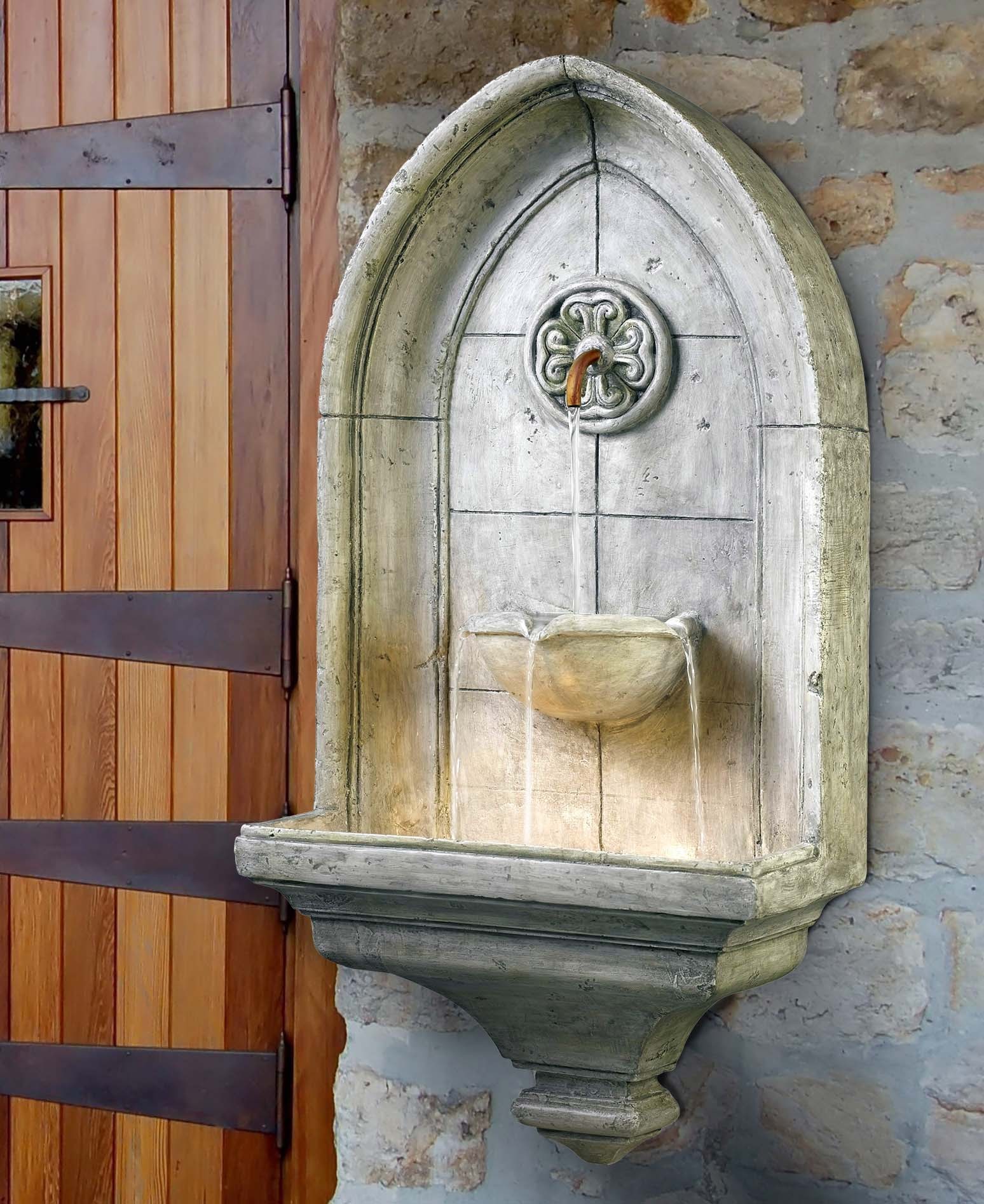
Five Useful Fountain Formats
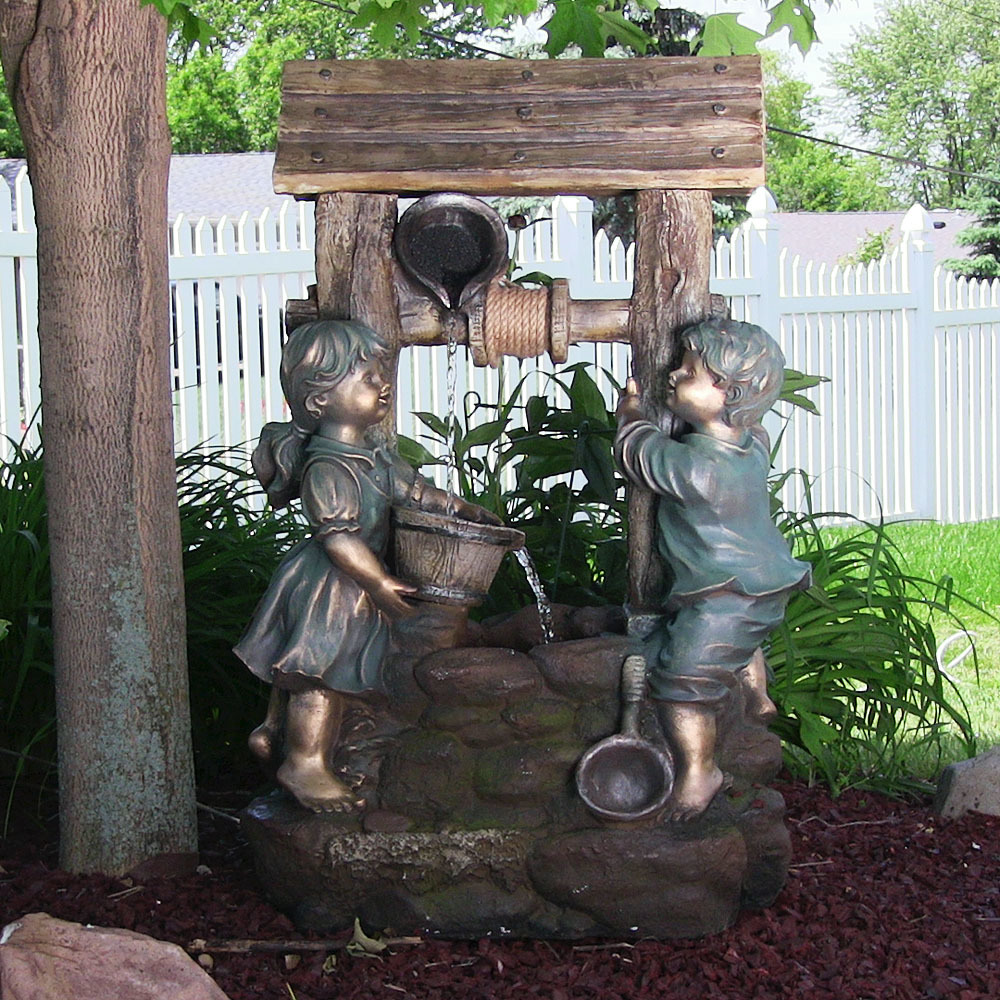
Self-contained fountains combine the basin, pump and decorative body in one unit. They are often the simplest choice for a patio because installation usually requires only a level base, water and a safe power supply.
Wall fountains place the decorative element against a wall or screen. Check how the unit is supported, whether the wall finish tolerates moisture, and where wind-blown spray will land.
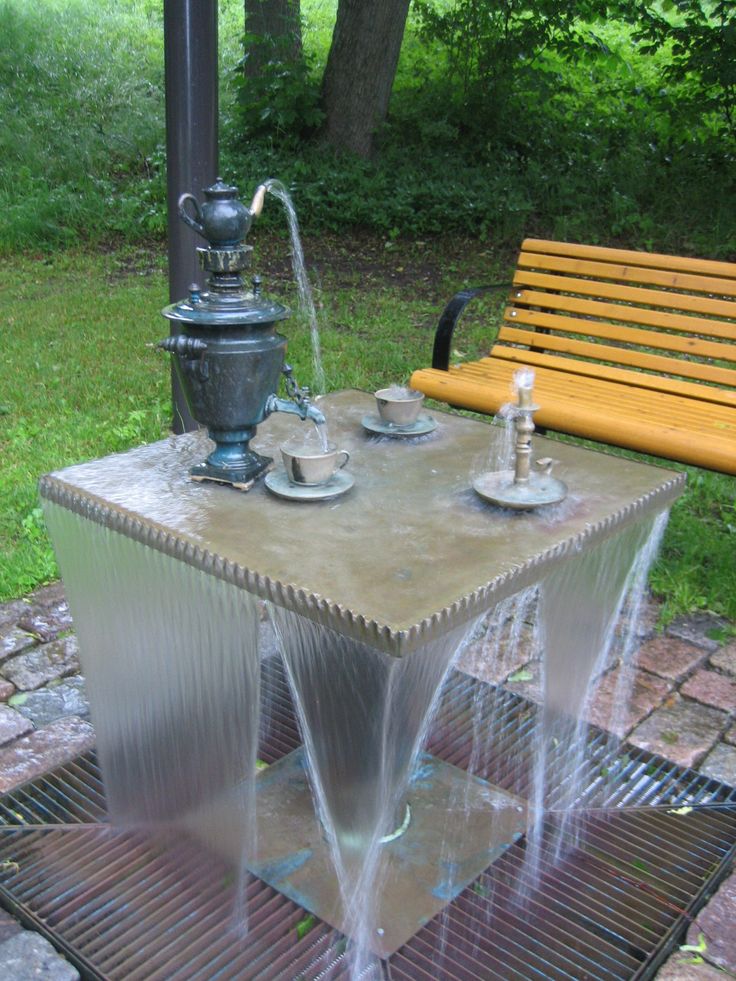
Disappearing or “pondless” fountains send water through a grate into a hidden reservoir. The surface is safer and visually lighter than an open basin, although the underground reservoir and pump still need an accessible inspection point.
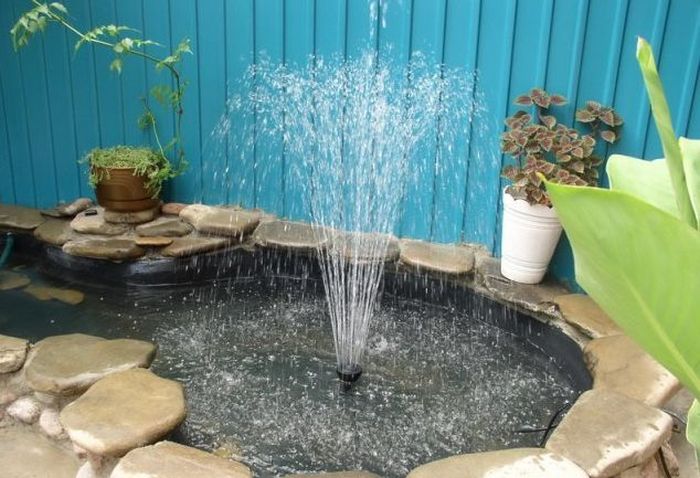
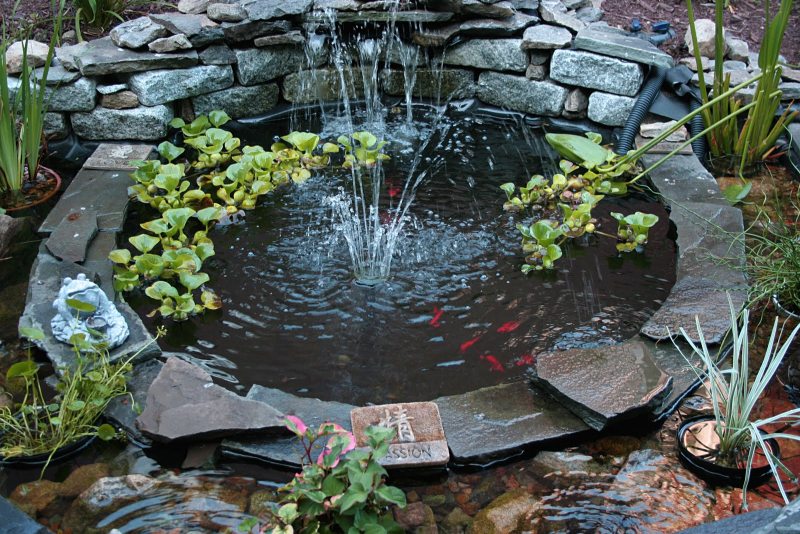
Pond fountains use a submersible or floating pump assembly in an existing pond. They can add movement and sparkle, but a decorative spray should not automatically be treated as adequate aeration for fish. Pond depth, stocking level and climate may require a separate aeration plan.
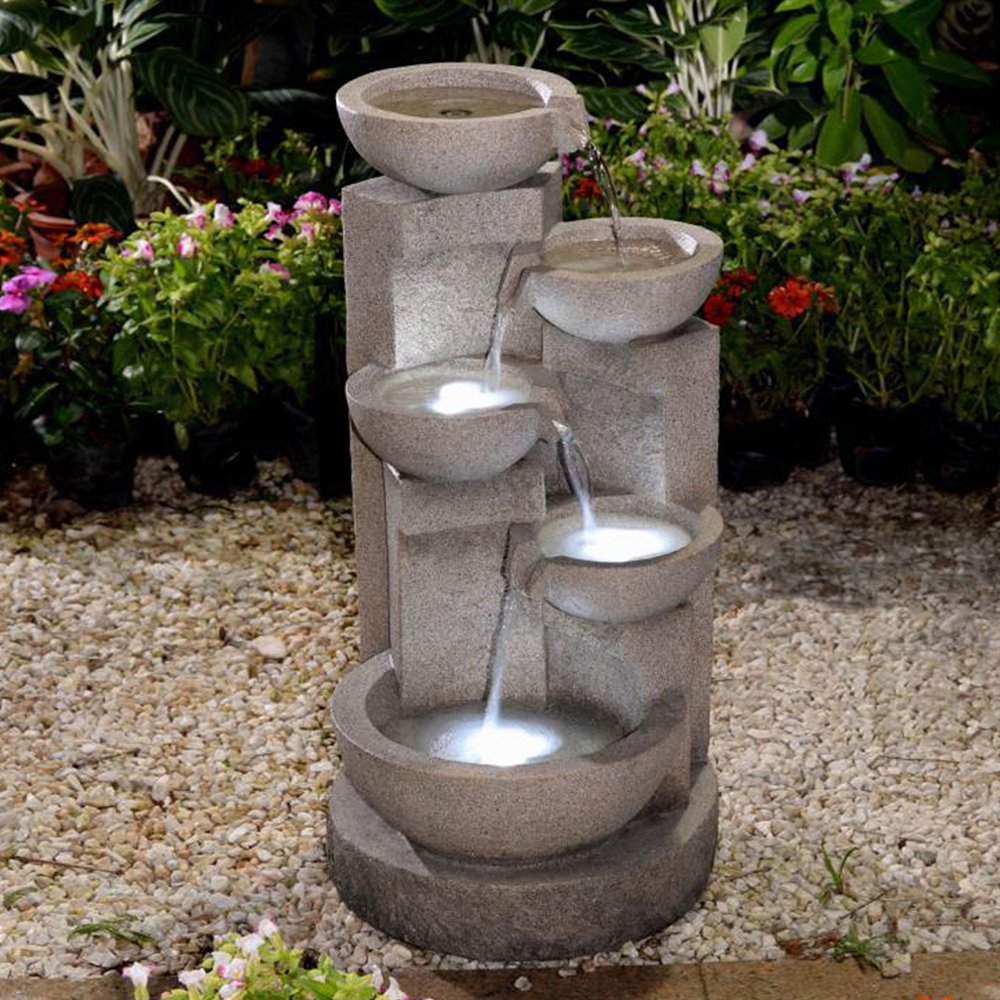
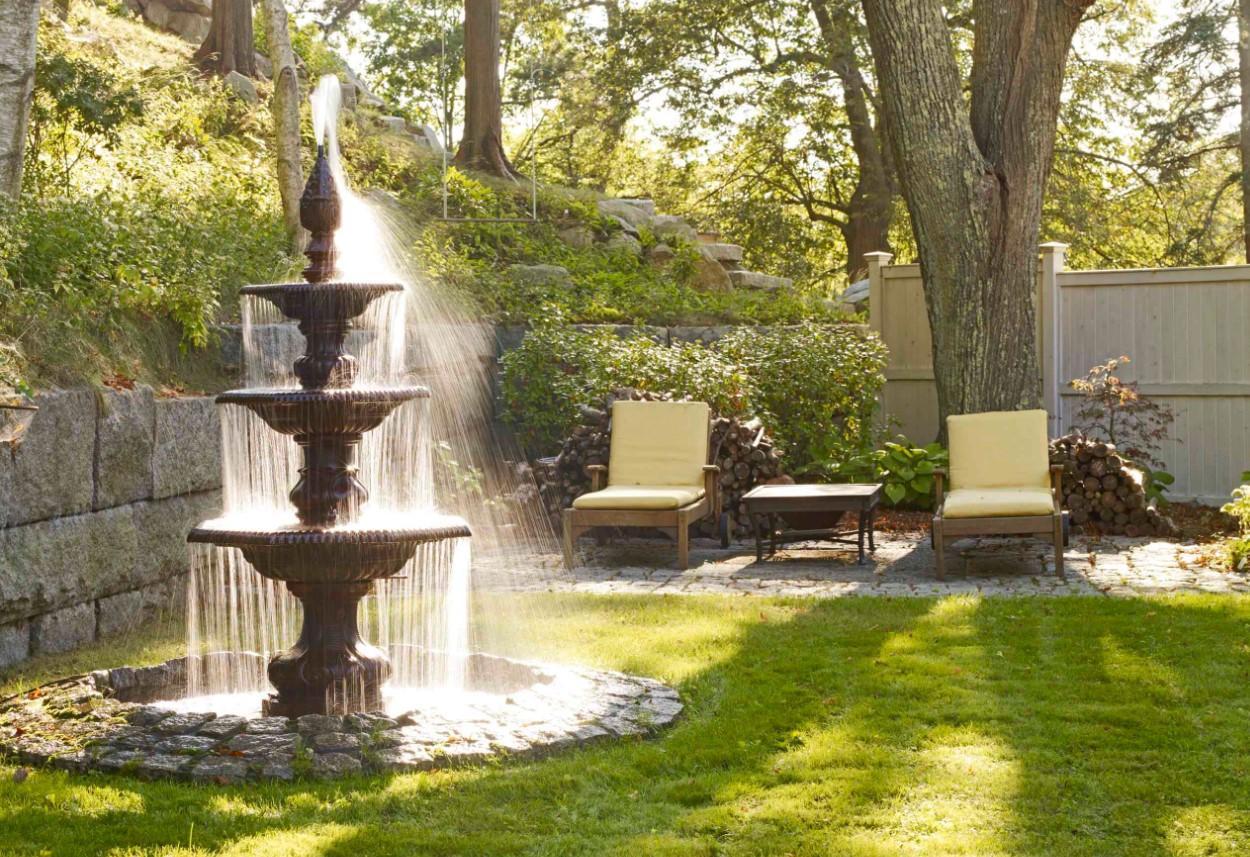
Architectural fountains include formal bowls, columns and multi-tiered structures. Their weight, wind exposure and splash radius deserve careful planning. Integrated lighting can extend the effect into the evening, provided every component is specifically approved for the location.

Plan the Basin and Water Reservoir
The reservoir must hold enough water to cover the pump and accommodate the water that drains back when the fountain is switched off. A larger reserve also gives more time between top-ups. The exact volume depends on the pump, spray pattern, climate and exposed water surface, so follow the fountain or pump manufacturer’s specifications rather than relying on a universal formula.
Preformed basins are convenient and predictable. A custom concrete basin offers more freedom but requires a suitable structure, waterproofing system and carefully detailed joints. Use products intended for permanent water exposure and compatible with the basin material. If wildlife or pets may drink from the feature, check every treatment product before use.
Add an overflow route that carries excess rainwater away from buildings and paths. Conceal cables and hoses without trapping inaccessible joints. A removable panel, lifting grate or service opening will save a great deal of work later.
How to Choose a Fountain Pump
Most domestic recirculating fountains use a submersible pump. Select it by both flow rate and head height. Flow rate describes how much water the pump can move; head height describes how high it can lift that water. A pump’s output falls as the lift and resistance increase, so the number printed on the box is not the flow you will necessarily get at the nozzle.
Measure the vertical distance from the normal water level to the outlet, then allow for friction in the hose, bends, valves and nozzle. Compare those figures with the manufacturer’s performance curve. Choose a pump with an adjustable flow or install a suitable control valve so the display can be tuned after assembly.
The pump should remain submerged to the depth specified by its maker and should never run dry unless it is designed to do so. Raise it slightly above the very bottom of the basin to reduce sediment intake, and use the recommended prefilter. A screen that is too fine can starve the pump; one that is too coarse allows debris into the impeller.
Match the Nozzle to the Space
Nozzles control the shape of the water, but the final effect also depends on pressure, wind and water level. Fine jets look delicate but drift easily. Film-forming nozzles such as bells are more sensitive to uneven flow and debris. Before buying, confirm that the nozzle and pump are compatible and that the expected spray diameter fits inside the basin.
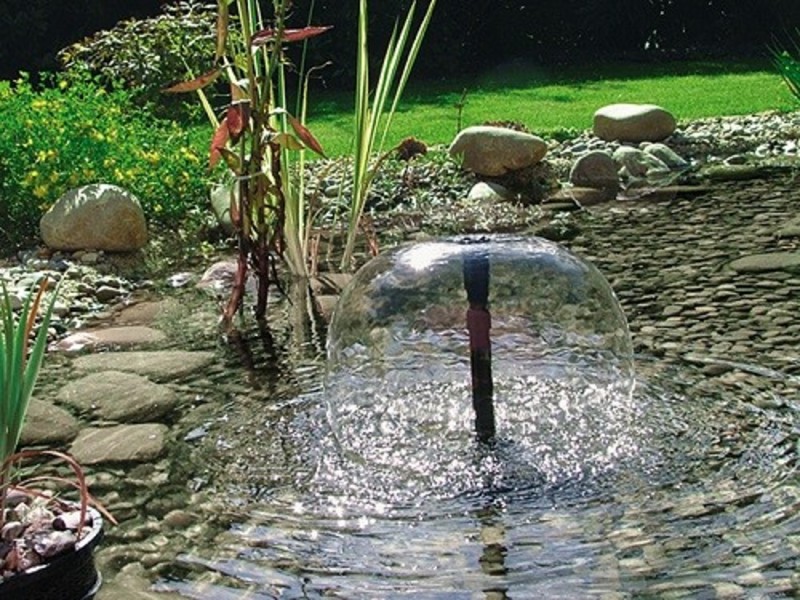
Bell nozzles spread a smooth sheet of water into a clear dome. The gap that forms the film must stay clean and evenly adjusted.
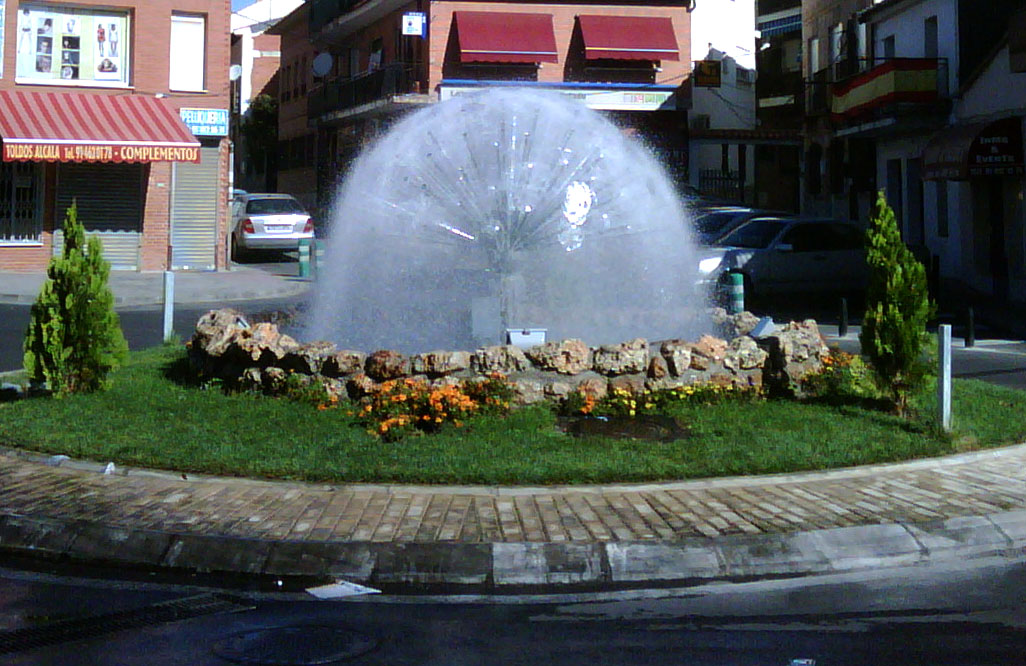
Hemisphere nozzles use many small jets to create a rounded, dandelion-like display. They need clean water because a blocked opening quickly spoils the symmetry.
Tulip nozzles create a film similar to a bell but angle it upward before the water falls. They are attractive in calm locations with an adequately wide basin.

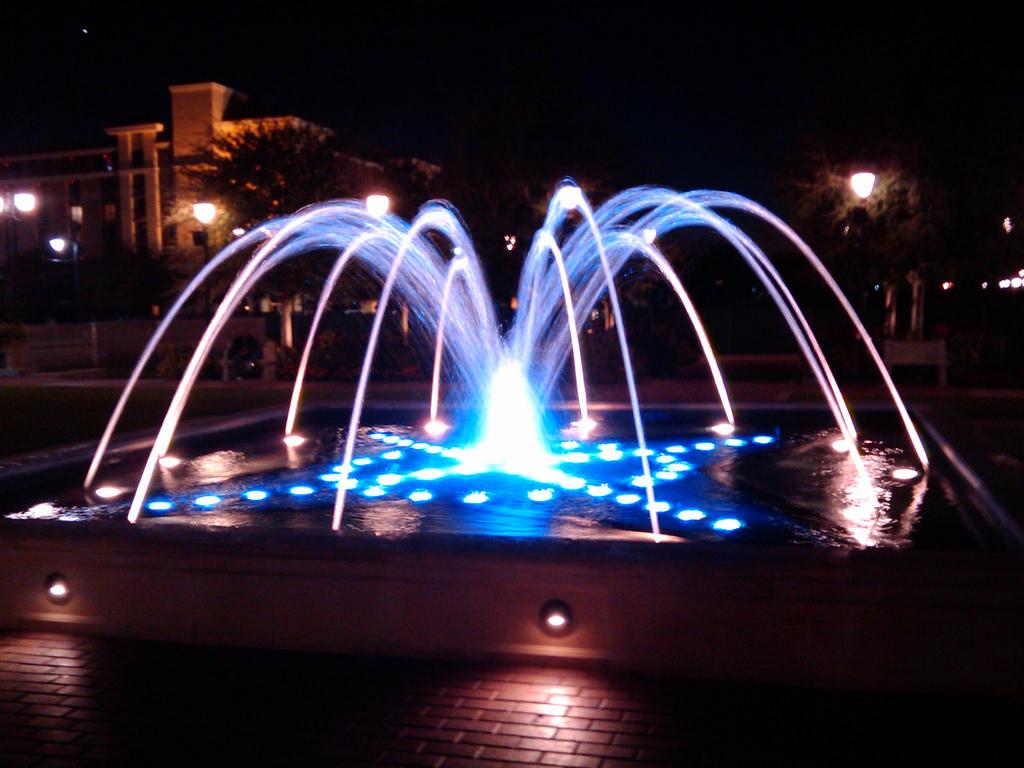
Fan or fishtail nozzles send several distinct streams outward. Ring nozzles arrange openings around a circular pipe to create a crown or tunnel of water. Tiered nozzles stack jets at different heights for a classic vertical display.

Materials, Lighting and the Surrounding Planting
Stone and concrete have visual weight and weather well when the material is suited to the climate, but they can be difficult to move and may be vulnerable to freeze damage if left full of water. Cast composite products, often sold as polystone or resin-stone fountains, are lighter. Their quality varies, so check UV resistance, frost guidance and warranty rather than judging by appearance alone.
For lighting, use a complete system intended for fountains or ponds, including the correct transformer and connectors. Position lights so they illuminate moving water without shining directly into viewers’ eyes. Make cables accessible for inspection and follow the manufacturer’s limits for depth and distance.
Planting helps a fountain settle into the garden, but leave the service side open. Choose plants that tolerate occasional splash if they will stand close to the basin. Avoid crowding the water with fast-shedding flowers or plants whose roots could interfere with buried reservoirs and pipes.
A Practical Installation Sequence
- Mark the fountain footprint, splash zone, service access and cable route.
- Confirm utilities and local requirements before digging or arranging electrical work.
- Prepare a level, load-bearing base and install the basin or hidden reservoir.
- Fit the pump, prefilter, hose, valve and nozzle without permanently closing the service opening.
- Fill with clean water and check for leaks before connecting power.
- Start the pump, adjust the flow and observe the display in calm and breezy conditions.
- Only after testing, finish the surrounding paving, gravel or planting.
Do not let anyone climb or sit on a fountain that was not designed for that load. Children should be supervised around any open water, however shallow, and the layout should comply with local safety requirements.
Routine Care and Winter Protection
Check the water level frequently during hot or windy weather and top up before the pump intake is exposed. Remove leaves and other debris, then clean the prefilter and pump at the interval given in the manual. Always isolate the electrical supply before maintenance. If the flow weakens, first look for a clogged intake, blocked nozzle, kinked hose or low water level.
Algae is easier to limit than to remove. Keep nutrient-rich soil and lawn runoff out of the basin, remove organic debris promptly and use only treatments compatible with the fountain materials, pump and any visiting wildlife. If the fountain is switched off for long periods and holds stagnant water, clean it regularly; public-health guidance recommends emptying and scrubbing water-holding containers weekly where practical to interrupt mosquito breeding.
Before freezing weather, follow the manufacturer’s winterizing instructions. Small pumps and delicate fittings are often removed, cleaned and stored frost-free. Drain any component that could crack when trapped water freezes, but do not empty a structure if its maker requires water or ballast for stability. Covering may help, provided the cover allows ventilation and cannot collect a heavy pool of rain or snow.
A well-planned garden fountain is a manageable system rather than a permanent maintenance problem. Choose a scale you can service, match the pump to the real lift, keep every electrical component appropriate for wet outdoor use, and make the reservoir accessible. Those decisions matter more than the number of jets—and they keep the water feature attractive long after the first day.