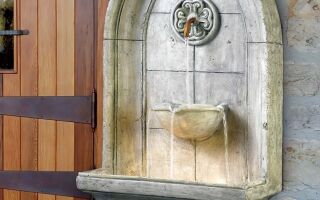
A garden fountain is a beautiful decoration for your yard that you can look at for hours. It also has a practical purpose – it helps create a special microclimate of freshness and purity. Moreover, children love garden fountains and enjoy playing with the streams of water.
So, if you’ve decided that a decorative garden fountain is simply a must-have for you, then… where do you start?
Choosing a Location and Model
First, you need to determine where in your yard the structure will be placed, what it will look like, and how the water will be supplied. Naturally, the most important requirement is compatibility with the yard’s design, the ability to fit into the overall style. When choosing the size, remember that large, freestanding structures will look inappropriate on a small yard – in this case, wall-mounted fountains or ones shaped like a bowl or an animal figurine are more suitable.
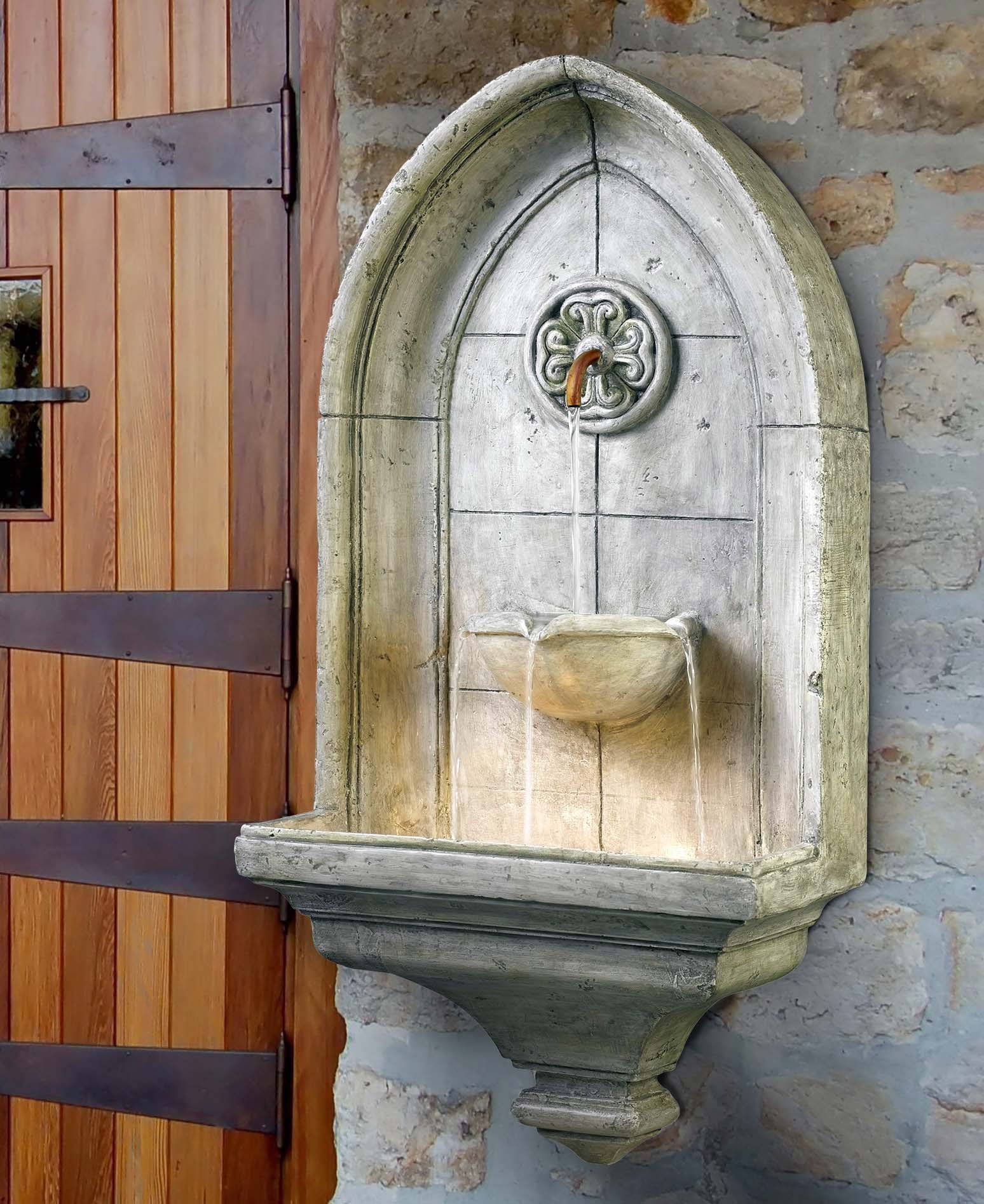
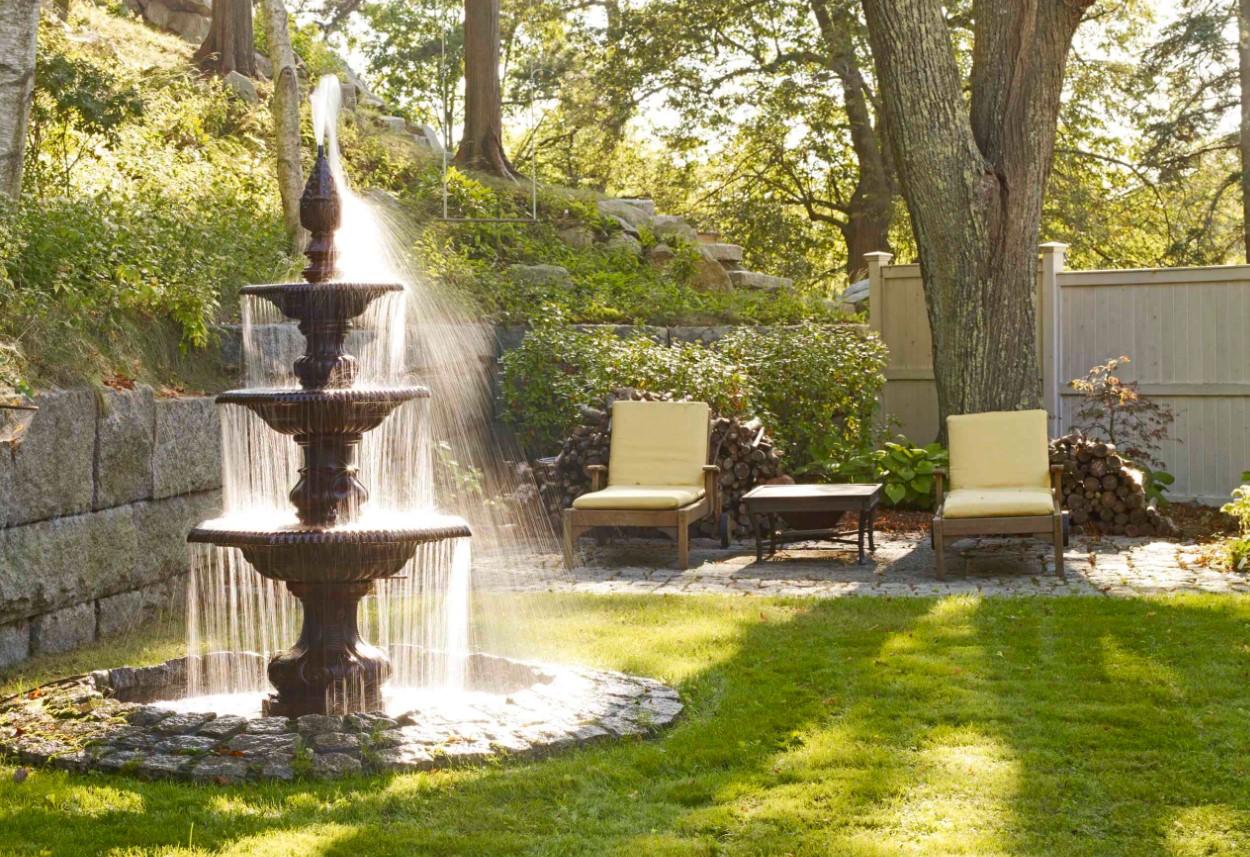
While small floor-standing garden fountains can be placed anywhere, a large one is best located further away from the house. It is advisable to install it near the recreation area, where it will create a relaxing atmosphere. It is better if the structure is located in the shade so that the water does not bloom from intense sunlight, and not under trees from which leaves fall.
Ensure that electricity for the pump is supplied without interruption. Accordingly, the larger the decorative fountain, the more powerful it is and the more energy it will require.
Decorative fountains for the dacha can have a variety of shapes, but some distinct types can be highlighted:
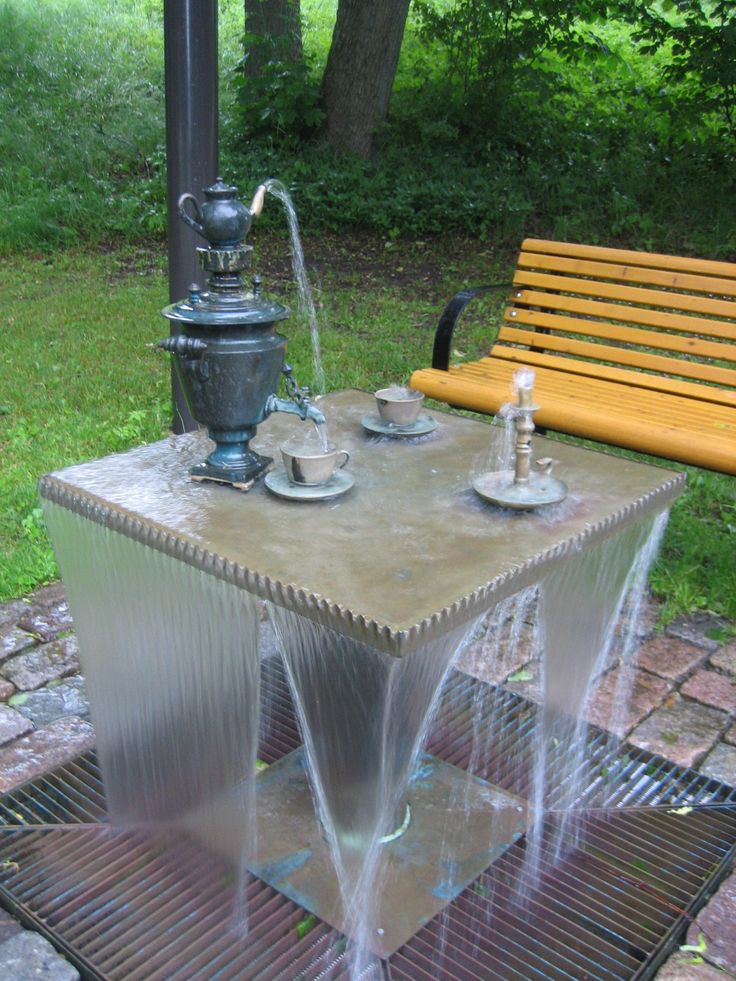
- dry – do not have an open basin; the water will drain through a grate into a storage tank and be supplied back to the fountain;
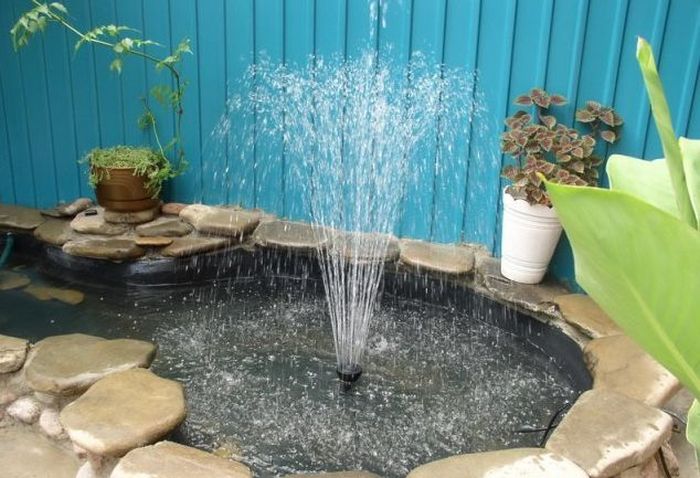
- submersible or floating – draw water from the reservoir in which they are installed;
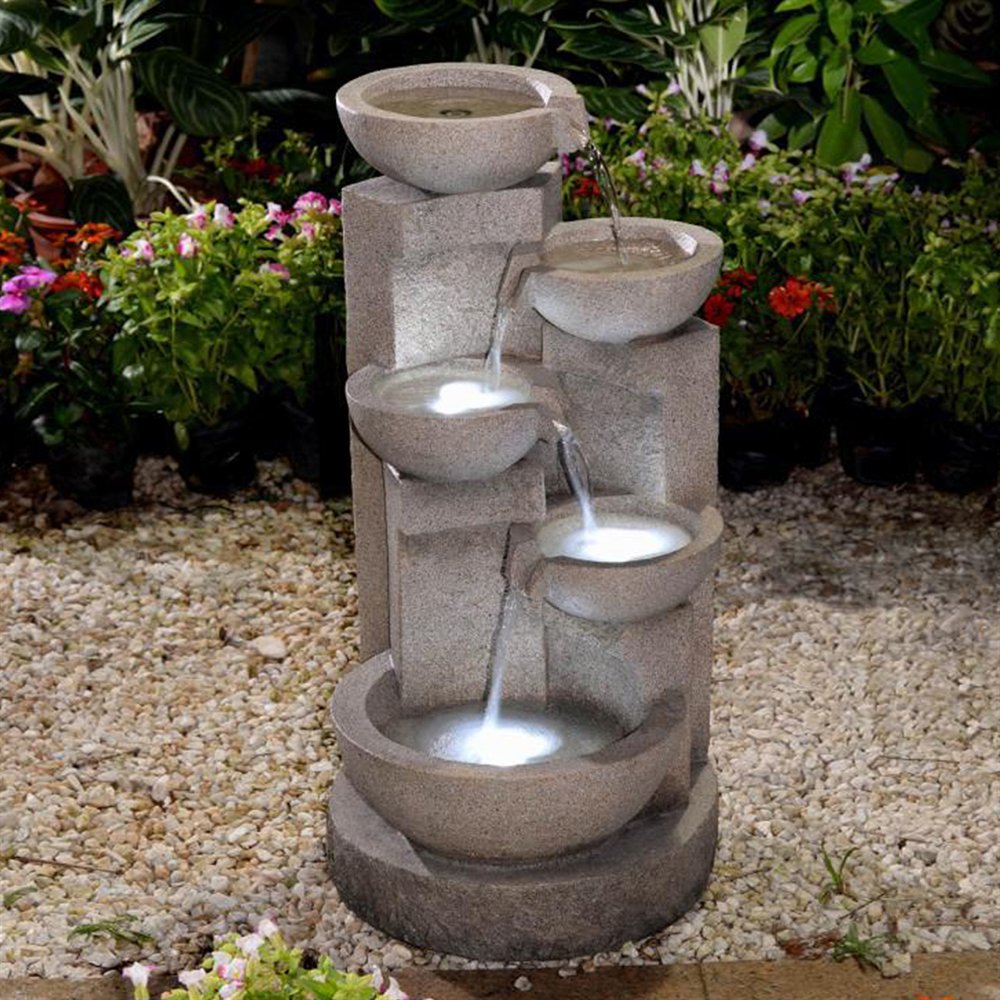
- stationary decorative – richly decorated with decorative elements and may have devices for creating unusually shaped jets;

- with special effects – complex systems with the effect of light-music, have electronic control, and sometimes a remote control.
Project and Components
So, you have decided what the new decoration for your garden will look like and where it will be located. Now you need to purchase the components:
The main components for floor-standing and other garden fountains are:
- water reservoir;
- pump;
- nozzles that will give the water jet a special shape.
The water reservoir can be of different shapes – everything depends on the chosen style of the structure. For example, a country-style fountain in a dacha yard does not limit the choice of shapes, while a classic style will require strict geometry. The reservoir is made independently or bought ready-made.
Care must be taken with waterproofing. It is chosen depending on the structure – a coating (obmazochnaya) one will be required for concrete, and if the decorative piece is dug into the ground or is a framed basin, a membrane one is needed. And the seams will need to be carefully sealed.
As a rule, garden fountains work with a pump, which is selected based on its power rating. There are three types of pumps, each with its own characteristics.
- Electromagnetic. Electromagnetic oscillations are transmitted to the valve, which allows the pump to operate. It is advisable to choose models that can pump up to 1.5 cubic meters of water per hour. Electromagnetic pumps are easy to maintain and lightweight; they do not require priming with water before switching on.
- Centrifugal. They only work when completely filled with water – water must remain in the pump’s container even when it is turned off. The operation process is slightly complicated by the need to monitor for air pockets.
- Vortex (Peripheral). They fill with water automatically and work on the principle of self-priming. This is the rarest type of pump.
Next, you need to decide on the nozzles, as their choice determines how the streams of water will look. The most common nozzles are:
- “bell” – the jets are directed downwards, the flowing water forms a hemisphere. Structurally, the fountain consists of two discs fixed one above the other, and the gap between them is used to regulate the thickness of the stream;
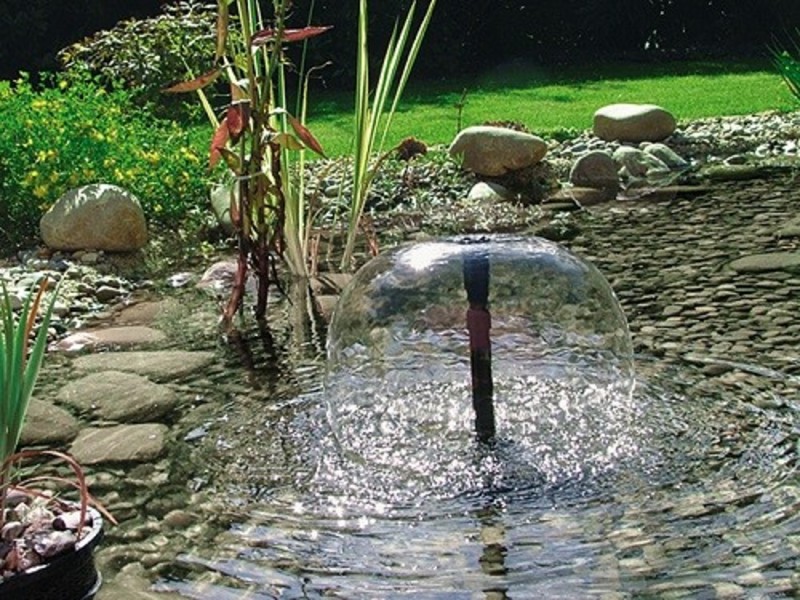
- “hemisphere” – combines several bell nozzles, which form the hemisphere. The fountain resembles a dandelion head;
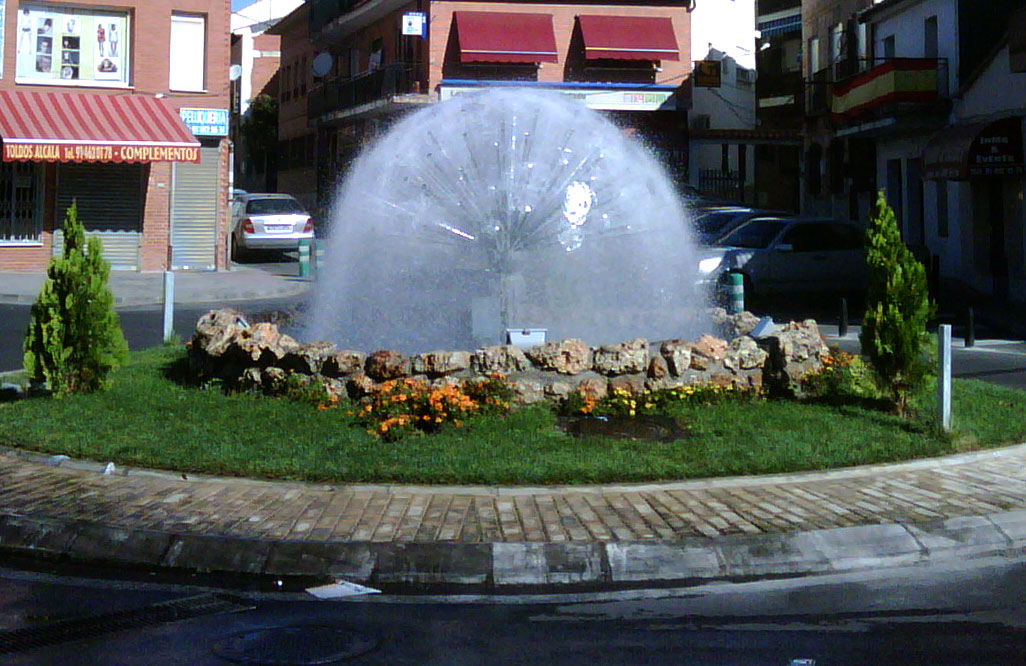
- “tulip” – similar to the “bell”, but the jets do not exit horizontally and downwards, but go slightly upwards;

- “fish tail” – a fountain with separate jets without forming a film;
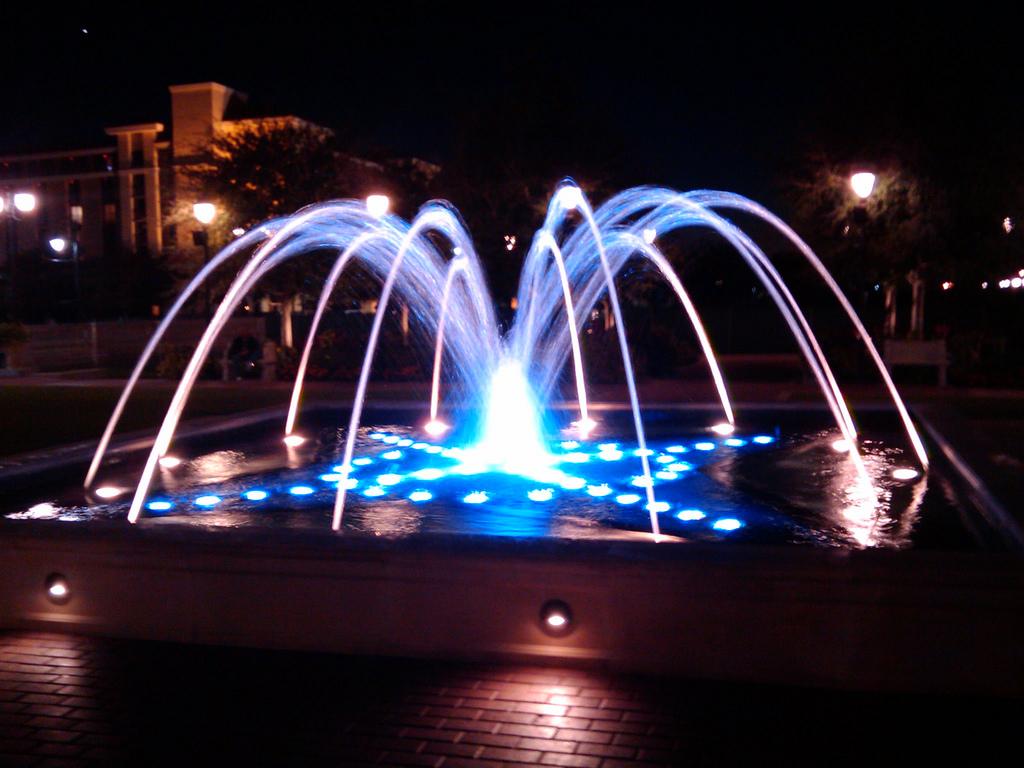
- “ring” – the pipe supplying the water jet is curved in the shape of a ring, with holes of the same diameter at equal intervals along the pipe;

- single sprayer – looks like several separately positioned high jets that shoot upwards at an angle of about 20 degrees;
- tiered sprayer – the structure is similar to the single sprayer, except that there are several tiers; the pressure changes from tier to tier;
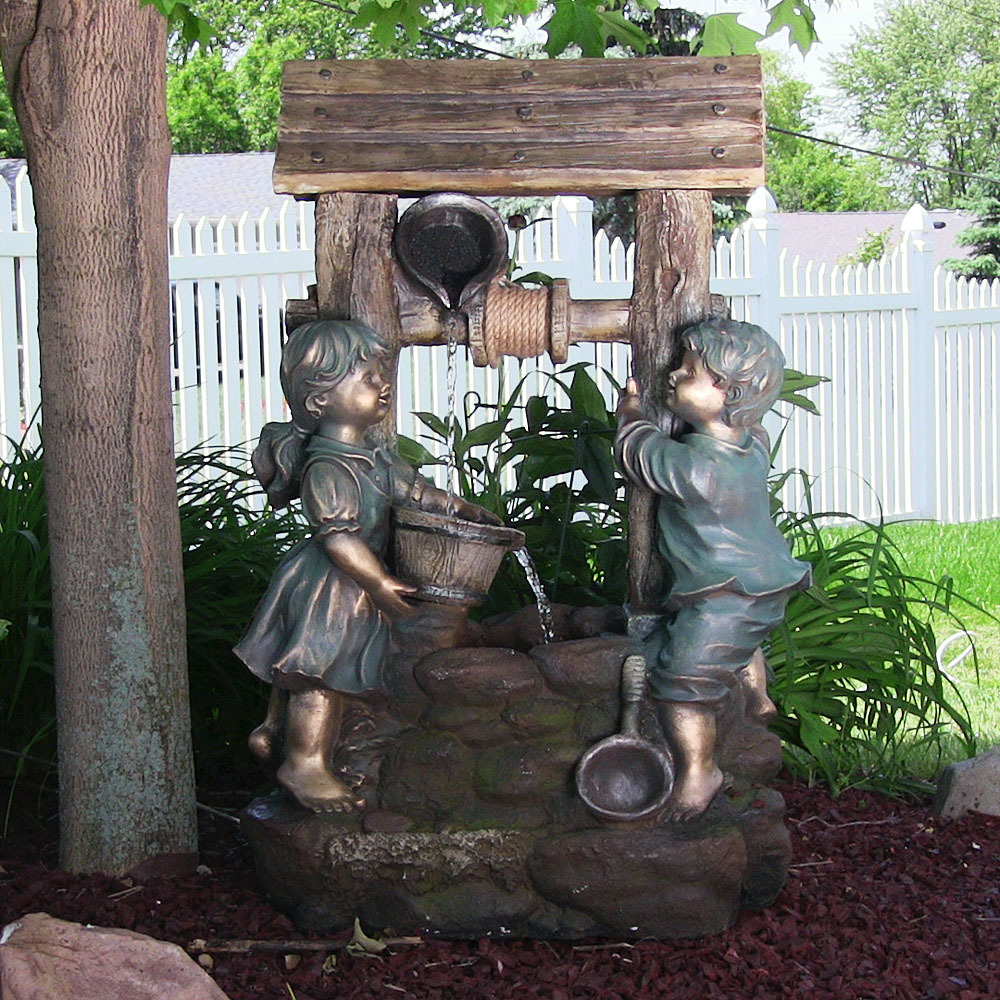
Garden fountains for the dacha made of polystone – artificial stone – are often seen in yards. This is a practical and relatively inexpensive material, which is a composite (cast) material with an admixture of natural minerals. It is also called artificial stone.
For the visual design of the structure, it is equipped with backlighting – this can be luminous optical fiber, lamps, or light filters. Backlighting can also be arranged underwater, but here one must be careful and use only special equipment. To avoid mistakes during installation, you should either get detailed consultations or contact specialists.
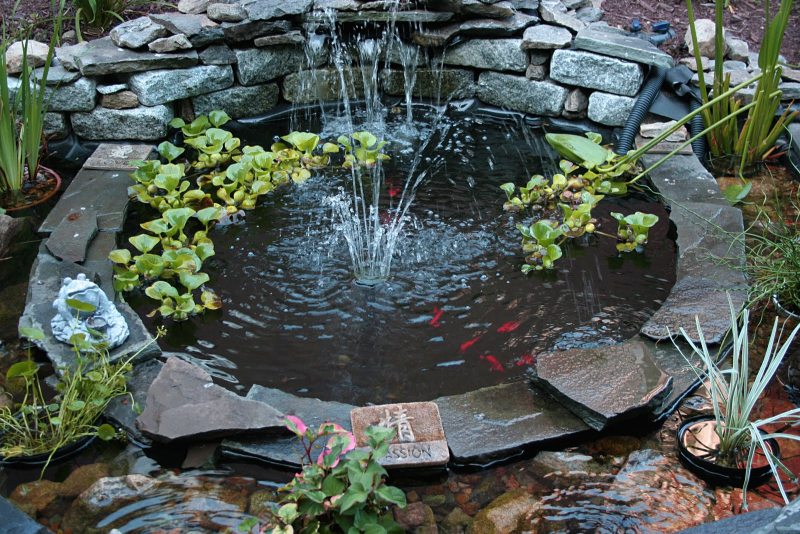
A fountain does not necessarily have to be a massive structure with a stone basin and sculptures. A small fountain for a pond in the dacha is a wonderful decoration even for a miniature plot of 2-3 hundred square meters, simple and inexpensive.
How to Care for a Garden Fountain
Regardless of whether you opted for a floor-standing garden fountain or another structure, its care will be straightforward. You will need to periodically clean the filters and the pump itself. The more intensely the fountain operates, the more often it will need cleaning. Debris and leaves that have fallen into the basin should be removed. Moisture-loving plants can be planted around it – don’t forget to water, weed, and feed them with nutrients. Decorative fountains will adorn any yard. With some skills, you can install such a structure yourself, and it will be a source of pride for you and delight for your guests.