A flexible pond liner lets you choose the outline, shelves and depth of a garden pond instead of accepting the fixed shape of a rigid shell. That freedom makes liner ponds ideal for naturalistic designs and waterfalls, but it also makes material choice, measurement and subgrade preparation important. The liner is the pond’s waterproofing system; decoration should never compromise it.
This guide compares the main liner options, explains how to calculate sheet size and outlines the installation details that prevent punctures, low edges and hidden water loss.

What Makes a Good Pond Liner?
A pond liner must remain watertight while conforming to curves, shelves and small movements in the soil. It should tolerate permanent immersion, the expected temperature range and installation conditions. If the pond will contain fish or wildlife, choose a product specifically identified as suitable for aquatic use.
Compare more than price per square foot. Check thickness, weight, flexibility in cold weather, UV exposure limits, puncture resistance, warranty terms and the approved seam and repair systems. Also confirm the largest factory sheet size; avoiding field seams usually reduces risk.
EPDM Rubber Liner
EPDM is a flexible synthetic rubber widely used for garden ponds. It follows organic curves well, tolerates folds and is available in large sheets. The material is heavy, so a large sheet may require several people to position safely. It also needs compatible primers, tapes and patches—roofing products and random adhesives are not automatically safe substitutes for a pond-rated system.
EPDM is often the most forgiving DIY choice for a permanent naturalistic pond. Install it over the underlayment specified by the supplier and protect it from sharp stone, exposed roots and concentrated loads.

PVC and Other Flexible Liners
PVC pond liner is generally lighter and often less expensive than EPDM. Quality and formulation vary, and some products become less flexible with age or low temperatures. Choose pond-grade material from a supplier that states the intended use, thickness, temperature limits and aquatic safety.
Other membranes—including reinforced polyethylene, thermoplastic systems and region-specific copolymer products—can work well when installed according to their own specifications. They differ in flexibility, field-seaming methods and minimum bend requirements. A material suitable for a large engineered reservoir may be inconvenient for a small pond with many tight folds.


Decorative Gravel-Faced Liner
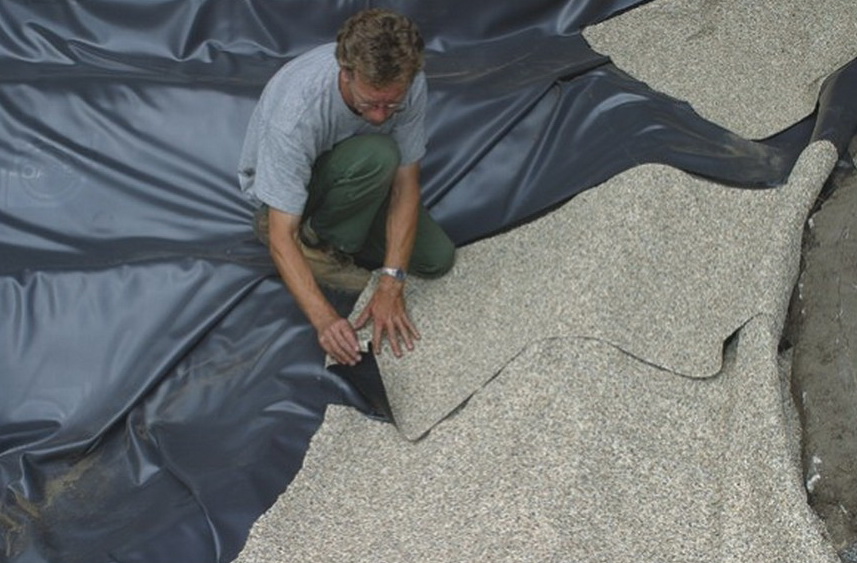
Stone- or gravel-faced liner is a finishing material used to disguise edges, streams and shallow transition zones. It should not be assumed to replace the primary waterproof liner. Install it over the continuous waterproof membrane, using compatible products and avoiding a detail that wicks water over the edge.

Calculate the Required Liner Size
Do not order liner from the plan dimensions alone. After establishing the actual maximum length, width and depth, use the supplier’s calculator. A common preliminary formula is:
- Liner length = maximum pond length + twice the maximum depth + edge allowance.
- Liner width = maximum pond width + twice the maximum depth + edge allowance.
The allowance must be generous enough for anchoring, settling and construction tolerances, commonly at least 12–24 inches (30–60 cm) on every side depending on the system. Irregular ponds, deep shelves and waterfalls may require more. Measure along the finished excavation with a flexible tape or rope before ordering whenever possible.
Buy one sheet if practical. If a seam is unavoidable, position it where it can be prepared on a clean, firm and accessible surface, and use the exact system approved for that liner. Do not rely on overlapping sheets held down by stones.
Prepare the Excavation and Underlayment
Establish the finished water level with a laser, builder’s level or water level. One low edge can empty a pond to that point. Excavate stable shelves with gentle transitions, remove roots and sharp stones, and compact loose soil. Do not stretch the liner over holes or unsupported shelf edges.
Install the supplier-approved geotextile underlayment over the complete excavation. In rocky soil, additional sand or engineered protection may be recommended, but sand alone can move and does not replace puncture-resistant fabric. Avoid old carpet containing staples, tacks or degrading backing.
Position and Fill Without Stretching
Choose a mild day if possible, because many liners are easier to handle when warm. With clean shoes and enough helpers, unfold the sheet over the pond. Center it and allow relaxed folds at curves. Do not pull the membrane tight across corners; water pressure should settle it into the excavation rather than suspend it like a drum.
Add water gradually while smoothing large folds and checking the perimeter. Let the liner settle before trimming. Keep a generous temporary overlap until stonework, plumbing tests and final water level are complete.
Detail Edges, Pipes and Waterfalls
The waterproof edge must remain above the normal and maximum operating level around the entire pond. Soil, mulch, geotextile or plant roots that bridge the wet zone can create capillary loss. Provide an intentional overflow route that carries excess water away from buildings without eroding the bank.
Use compatible boots, flanges or bulkhead fittings for pipe penetrations. Random holes sealed with general-purpose caulk are unreliable. For a waterfall, overlap or join the cascade liner so every hidden leak returns to the pond, and raise both side edges above the highest flowing water.
Protect the Liner During Rockwork
Large stones need stable structural support. Place protective geotextile or manufacturer-approved padding between rock and liner, and avoid trapping the membrane over a sharp point. Never allow machinery to drive over a buried liner edge. Rounded gravel can disguise exposed areas, but thick layers of stone also trap organic debris and make cleaning harder.
Plan access for the pump and filter before finishing the edge. A beautiful boulder that must be moved every time the intake clogs will quickly become a maintenance problem.
Leaks, Repairs and Long-Term Care
A falling level does not always mean a puncture. Turn off waterfalls and fountains to distinguish splash or stream-edge loss from a basin leak. Check plumbing, skimmers, overflow and capillary bridges. Mark the water level and observe where it stabilizes before exposing the liner.
Repair a clean, dry area with the materials specified for the membrane. Surface preparation is part of the repair system, so follow cure times and temperature limits. Avoid broad chemical algae treatments that are not approved for the liner and pond life; physical removal and nutrient control are usually safer starting points.
If you prefer a fixed compact shape, compare a preformed garden pond. For a custom pond and cascade, our guide to building a garden pond with a waterfall explains how liner, pump and reservoir work together.