Geotextile under a garden path can keep soft soil from mixing with the stone base, improve filtration, and make future repairs cleaner. It is useful in the right layer for the right reason—but it cannot replace drainage, adequate excavation, or proper compaction.
The most common residential mistake is treating every black landscape fabric as the same product. Thin weed-barrier cloth, structural woven geotextile, and nonwoven filter fabric have different strengths and water-flow characteristics. Choose by function and manufacturer specifications, not by color alone.

What geotextile does under a path
- Separation: prevents fine subgrade soil from pumping upward into the aggregate and keeps stone from disappearing into soft ground.
- Filtration: allows water to move while retaining soil particles when the product and surrounding materials are correctly matched.
- Stabilization: spreads loads and can improve the performance of aggregate over weak soil.
- Construction convenience: provides a clean boundary during installation and later repairs.
Geotextile may slow weeds that grow upward from roots or soil below, but it does not create a weed-proof path. Seeds will still germinate in dust, leaves, and organic debris that accumulate on top.
When it is worth using
A separation fabric is most helpful over clay, silt, recently disturbed ground, and other subgrades that become soft when wet. It is also useful under loose aggregate where migration between soil and stone is likely. High-traffic routes, slopes, and paths that carry small equipment demand more careful product selection.
On firm, well-drained soil beneath a light decorative path, fabric may offer little benefit. Around established trees, excavation and grade changes can damage roots; adjust the route or seek qualified advice rather than cutting major roots and covering them with a deep base.
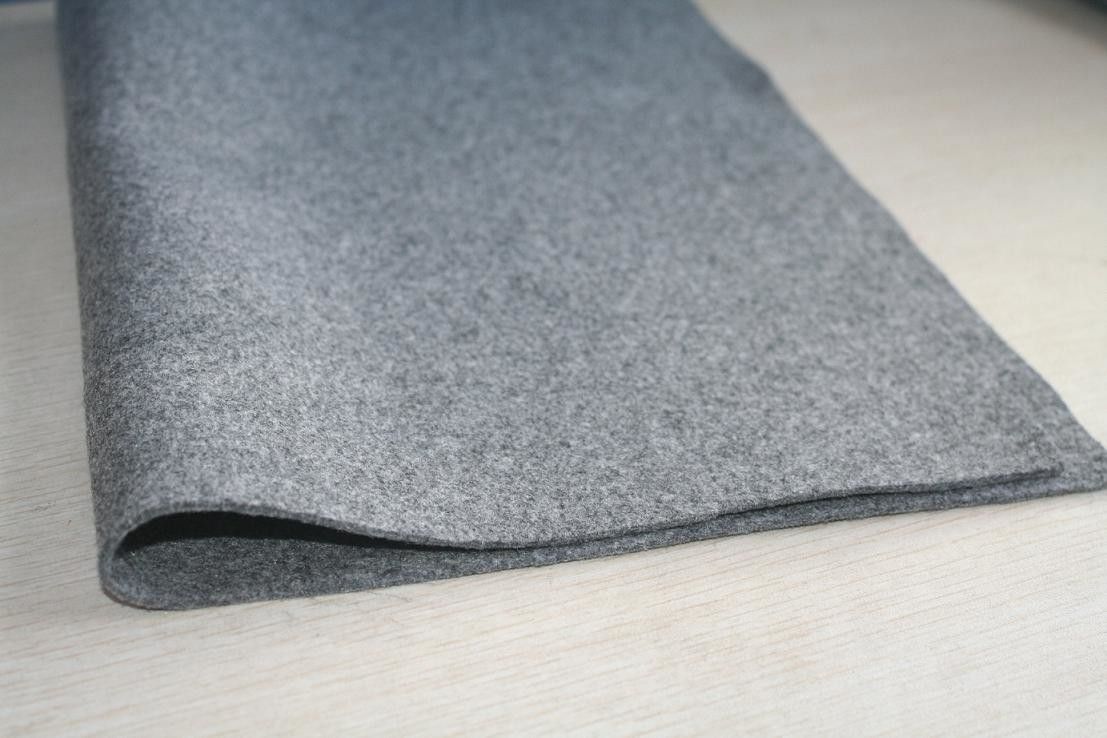
Woven or nonwoven geotextile?
Woven geotextiles resemble strong fabric made from intersecting tapes or yarns. Many products offer high tensile strength and are used for separation and stabilization. Water flow varies widely, so check the data sheet.
Nonwoven geotextiles resemble felt and are commonly needle-punched. They are frequently selected where filtration and drainage are important, although strength and thickness also vary. A heavy product is not automatically appropriate; the opening size, permeability, puncture resistance, and intended application all matter.

Polypropylene and polyester are both used in geotextiles. For a garden path, focus on a product rated by its manufacturer for separation beneath aggregate. Ask the stone supplier or a local geotechnical supplier for a recommendation based on soil, aggregate size, expected load, and climate.
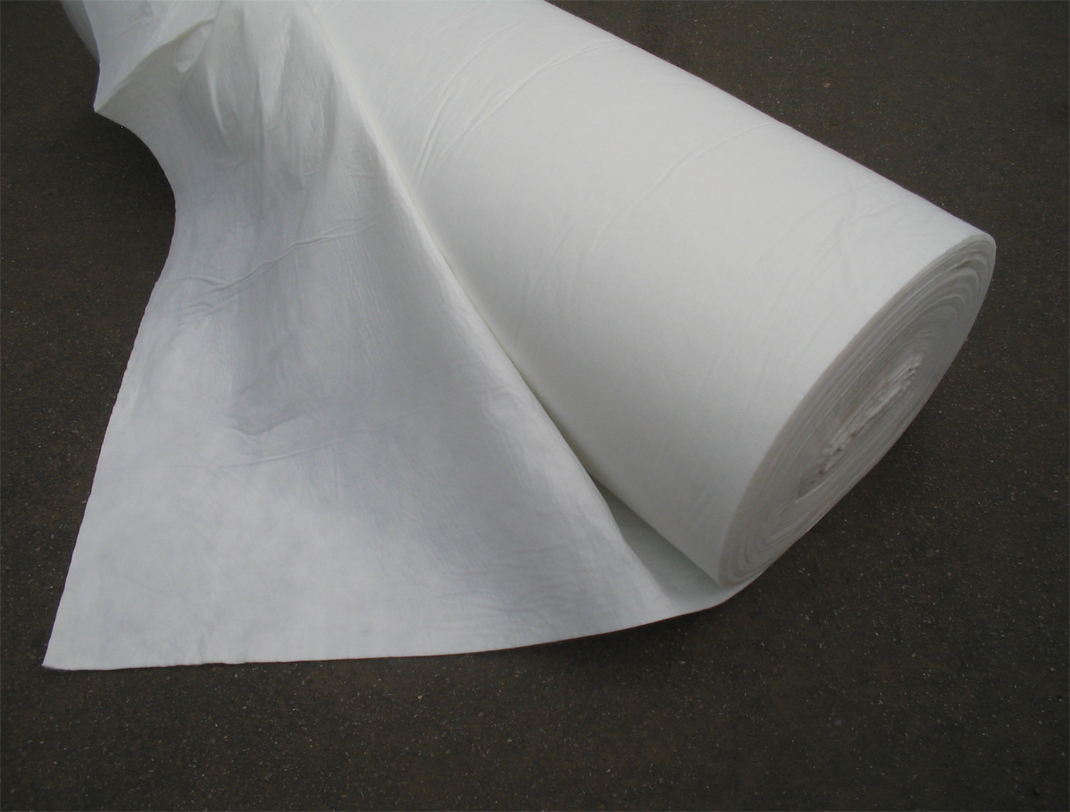
Geotextile is not plastic sheeting
Do not substitute impermeable polyethylene film beneath a permeable path. Water can collect above it, freeze, carry fines, or emerge at the edges. The path still needs positive surface drainage, and the fabric must allow the water movement required by the design.
Likewise, do not confuse a thin garden-bed weed barrier with a geotextile specified for construction loads. A product that tears while stone is spread cannot perform as a separator.
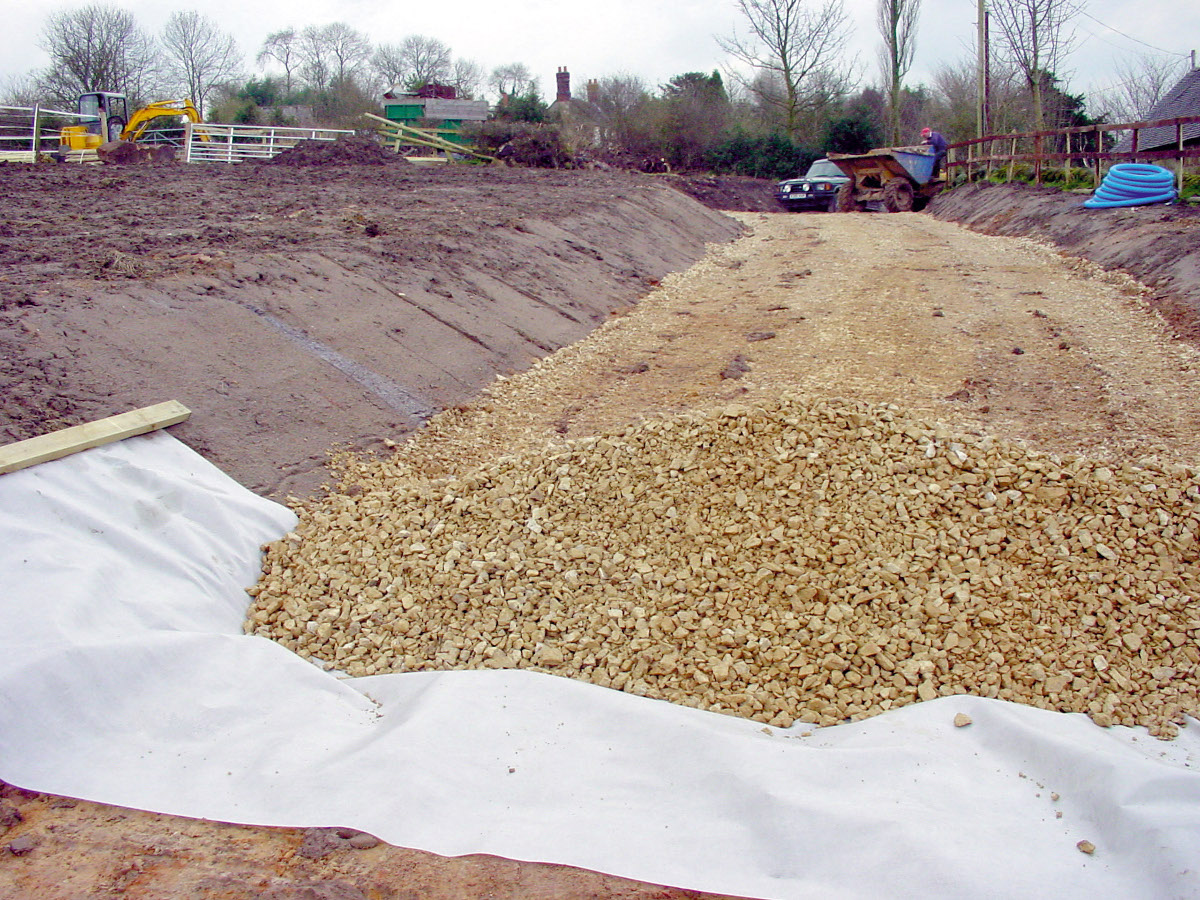
How to install geotextile under a path
- Plan drainage first. Establish the route, finished elevation, and a slight crown or cross slope. Correct springs, downspout discharge, and low spots before construction.
- Excavate and prepare the subgrade. Remove vegetation, roots, soft pockets, and sharp debris. Compact the soil where appropriate.
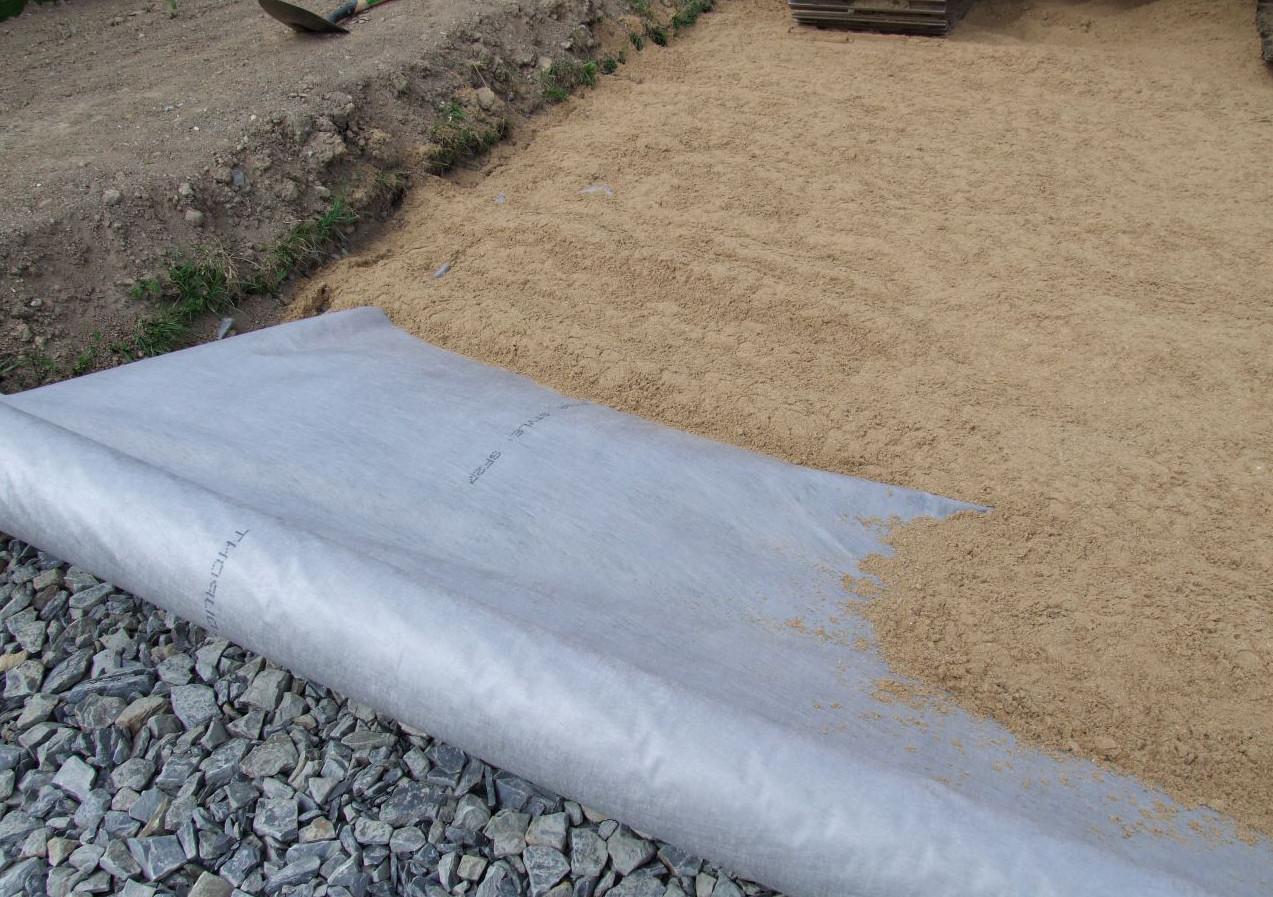
- Roll out the fabric smoothly. Avoid wrinkles and unnecessary cuts. Place the material in the orientation required by the manufacturer.
- Overlap seams. Required overlap depends on soil strength, product, and load; follow the product instructions or project specification. Very soft ground may require wider overlaps or sewn seams.
- Extend beyond the base. Provide enough width to maintain separation at the path edges, then trim or detail the edges as the system requires.
- Cover promptly. Sunlight can degrade exposed synthetic fabric. Secure it temporarily with staples or small amounts of aggregate, then cover it without driving directly on exposed fabric unless the manufacturer permits it.
- Place aggregate carefully. Dump stone onto previously placed stone and spread forward to reduce punctures. Compact the base in thin lifts.
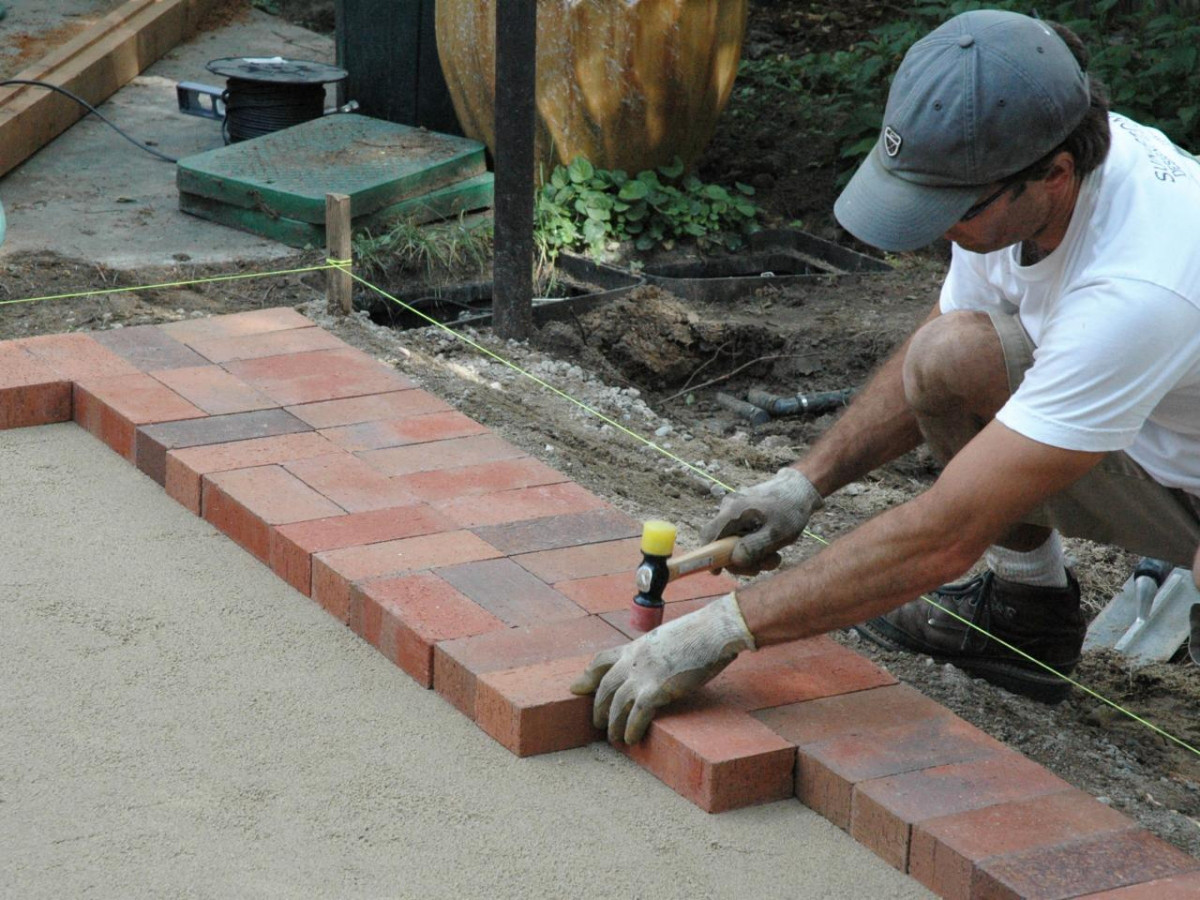
Where does the fabric go?
For a typical gravel path, the separation geotextile usually lies on the prepared soil beneath the compacted aggregate base. Placing fabric directly below a thin decorative surface does not compensate for a weak base and may become exposed during raking.
Some engineered paving systems use additional filter or reinforcement layers. Do not copy a generic two-layer diagram without considering the actual pavers, bedding material, subgrade, drainage, and freeze-thaw conditions.
Common mistakes
- installing fabric over turf or loose organic soil;
- using it to hide a drainage problem;
- placing sharp stone directly from height and puncturing the sheet;
- leaving gaps or narrow overlaps;
- exposing fabric at the edges or to long-term sunlight;
- expecting it to eliminate all weeds;
- using impermeable plastic beneath a permeable path.
Choosing a practical path system
Geotextile works as one component of a complete structure: prepared subgrade, drainage slope, appropriate separator, compacted base, edging, and a suitable finish. See how it fits into a gravel garden path, a pebble path, or a rustic wood-slice path. Used for the correct function, it helps the layers stay distinct and the path remain serviceable.