An affordable garden path does not have to look temporary. The smartest low-cost projects save money on the finish while keeping the essentials: a logical route, positive drainage, a stable base where needed, and edging that controls loose material. Skipping those basics often produces a path that must be rebuilt after the first wet season.
Use this guide to compare practical materials—from gravel and wood chips to stepping stones and reused lumber—and to decide where spending a little more will prevent expensive repairs.

Plan before buying materials
Begin with the routes people already use. Connect doors, gates, patios, storage areas, vegetable beds, and water sources directly. A secondary path for one person can be about 30 to 36 inches (75–90 cm) wide, while a frequently used two-person route is more comfortable at 42 to 48 inches (105–120 cm).
Observe the site during rain. Keep the path slightly above adjacent soil and give it a subtle crown or cross slope. Do not direct runoff toward the house, a neighbor, or an eroding slope. Call the local utility-marking service before excavation.
1. Gravel and crushed stone
Gravel is among the best values for a durable path. The visible stone can be modestly priced, but the surface remains comfortable only when it is shallow, edged, and supported by compactable crushed aggregate. Rounded pea gravel shifts more than angular stone and is harder for wheels.

For layer depths, aggregate choices, and installation, see our complete gravel garden path guide.
2. Wood chips or coarse bark
Arborist wood chips can make an inexpensive informal path between beds or through a woodland garden. They cushion footsteps, reduce mud, and are easy to renew. Place them over cleared, reasonably drained ground with simple edging. Expect decomposition and top up the layer periodically.
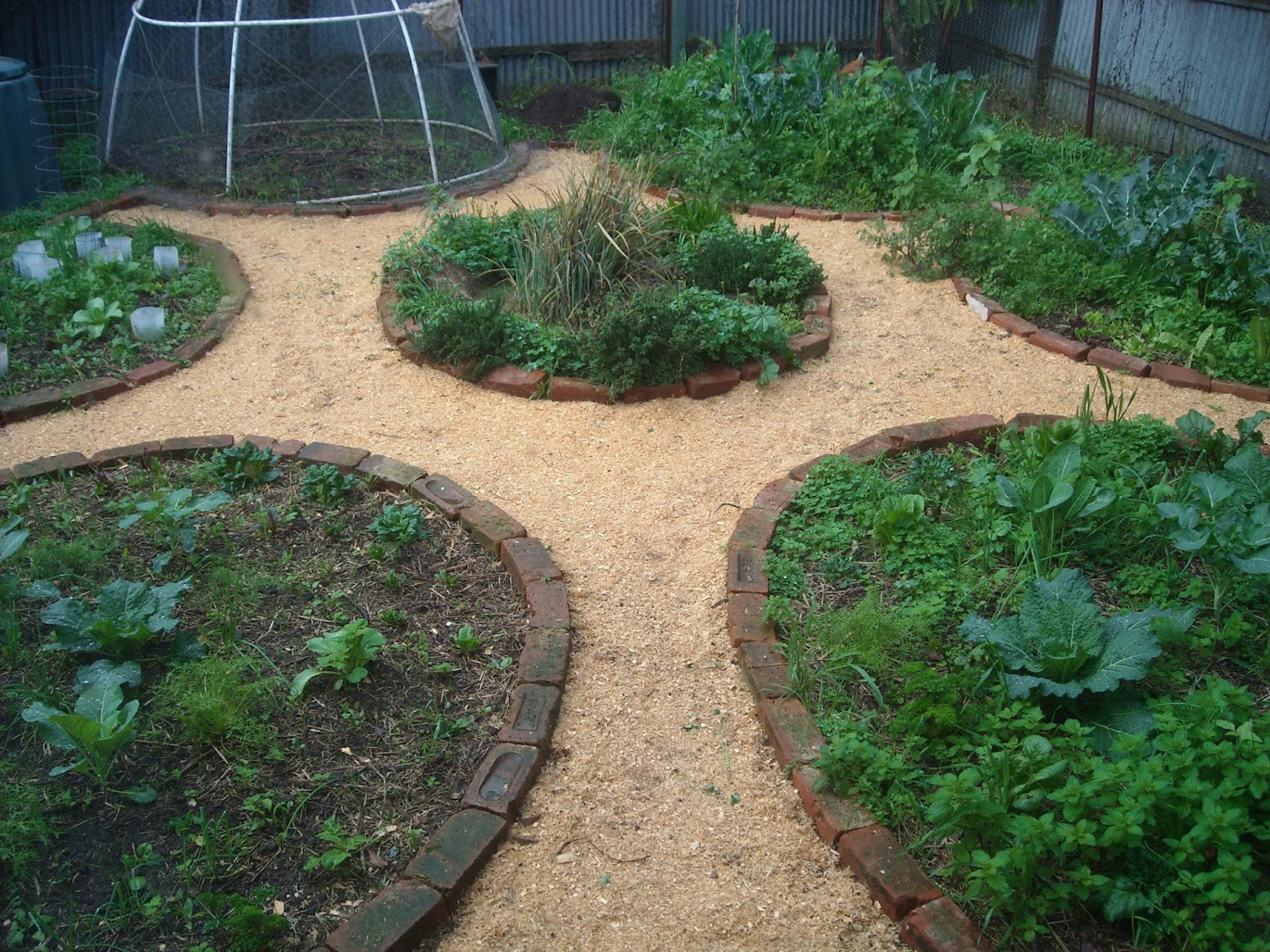
Do not use fine sawdust as a deep walking surface: it mats, becomes slippery, and decomposes quickly. Keep fresh chips away from building siding and follow local guidance where termites or wildfire are concerns.
3. Stepping stones with planted joints
Spaced flagstones or precast stepping stones reduce material cost because the entire path is not paved. Set every stone on a prepared, compacted bed so it cannot rock. Test the spacing with several users before final installation; a stride comfortable for one person may be awkward for another.
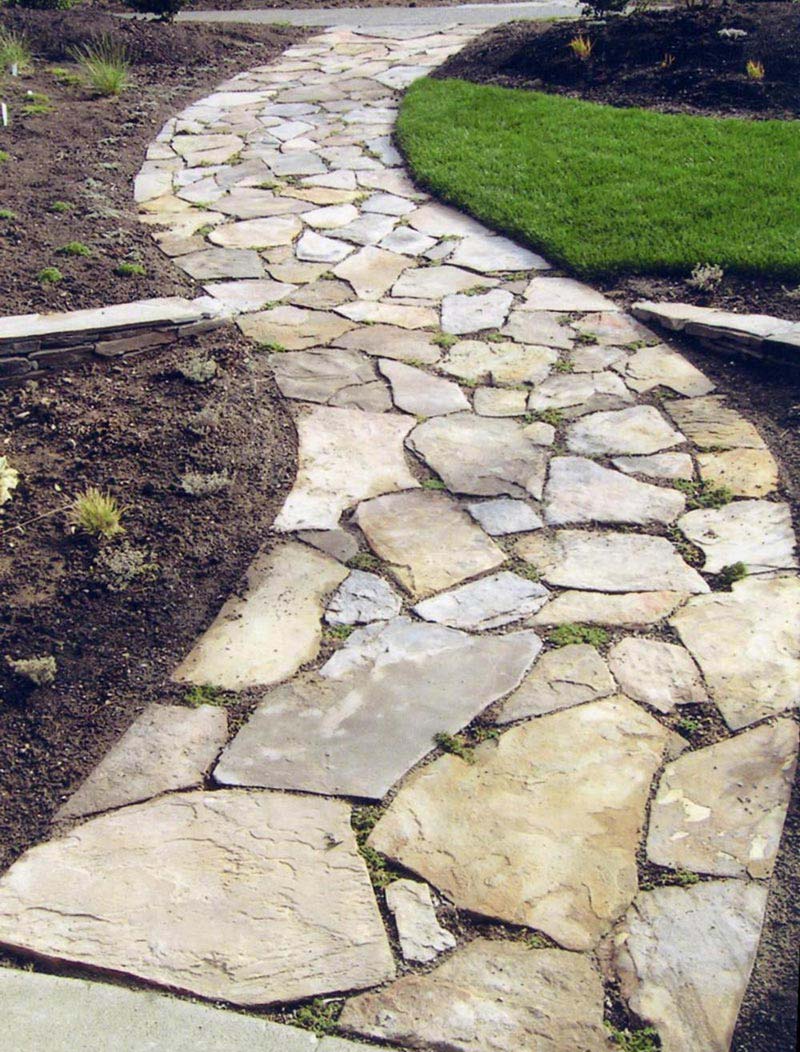
Low groundcovers can soften the joints in light traffic, but select plants suited to the climate, light, moisture, and occasional foot pressure. Gravel joints are usually easier to maintain on a main path.
4. Precast concrete pavers
Standard concrete pavers are less romantic than natural stone but predictable in size and easy to replace. Watch for local overstock, reclaimed pavers in sound condition, or a simple running pattern that minimizes cuts.
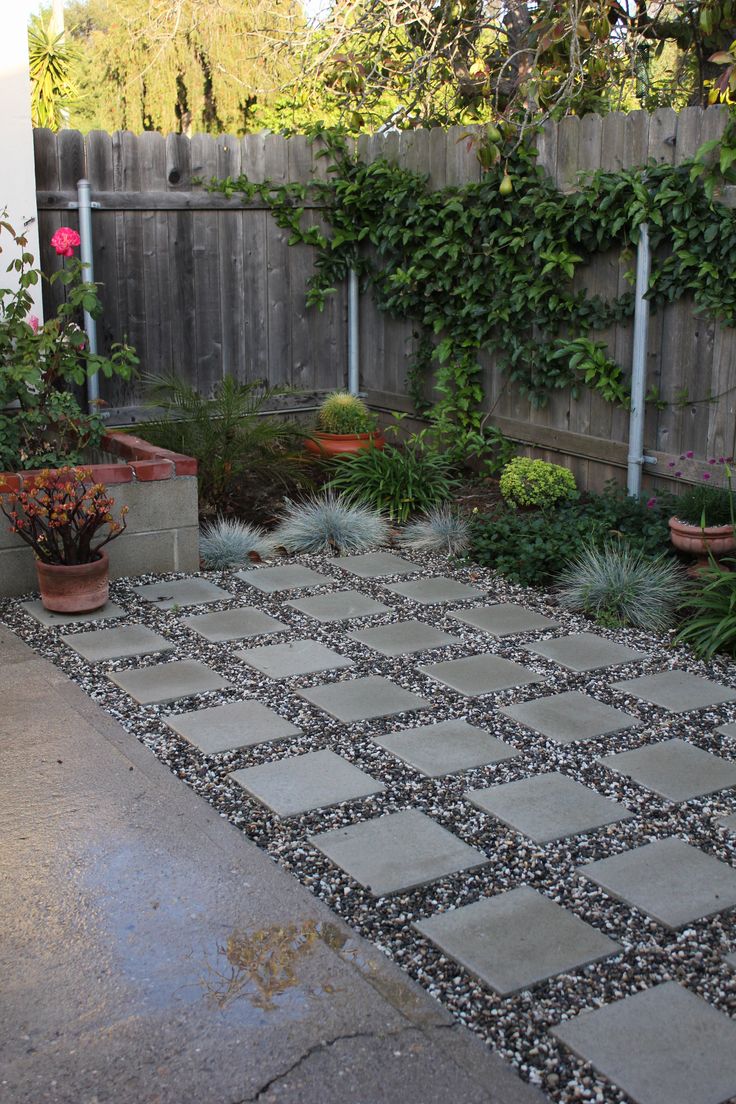
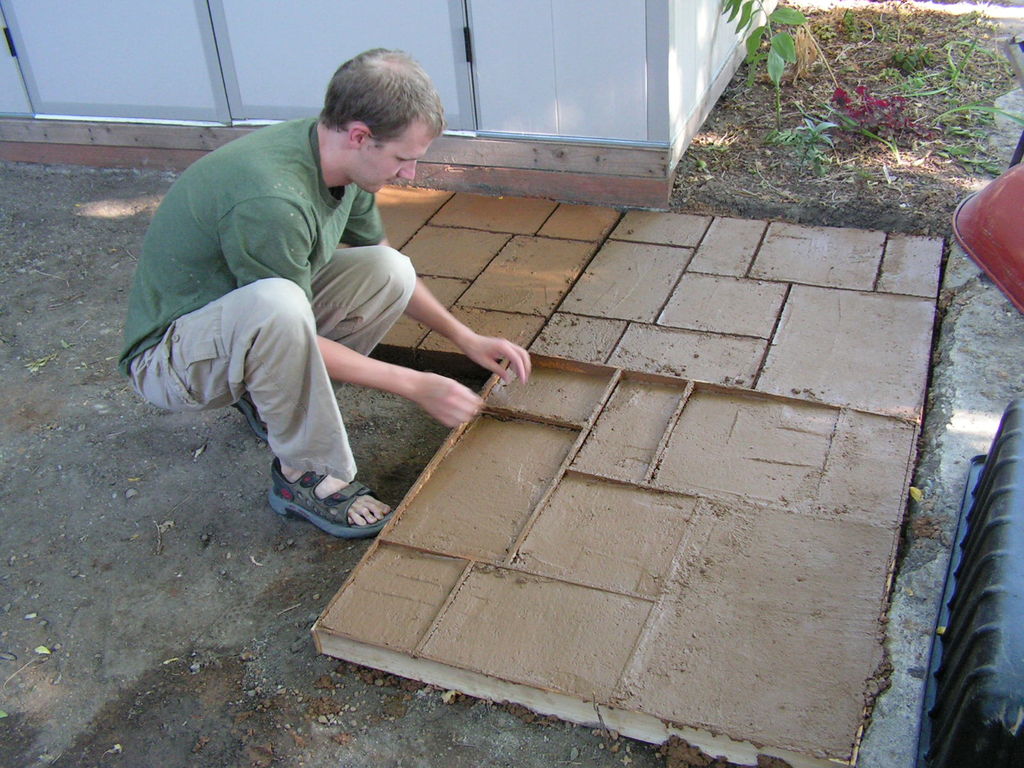
Home-cast concrete slabs are possible, but molds, reinforcement, curing, freeze-thaw durability, and safe handling add work. Follow a proven exterior concrete design rather than pouring thin decorative pieces that crack or expose sharp edges.
5. Reclaimed brick
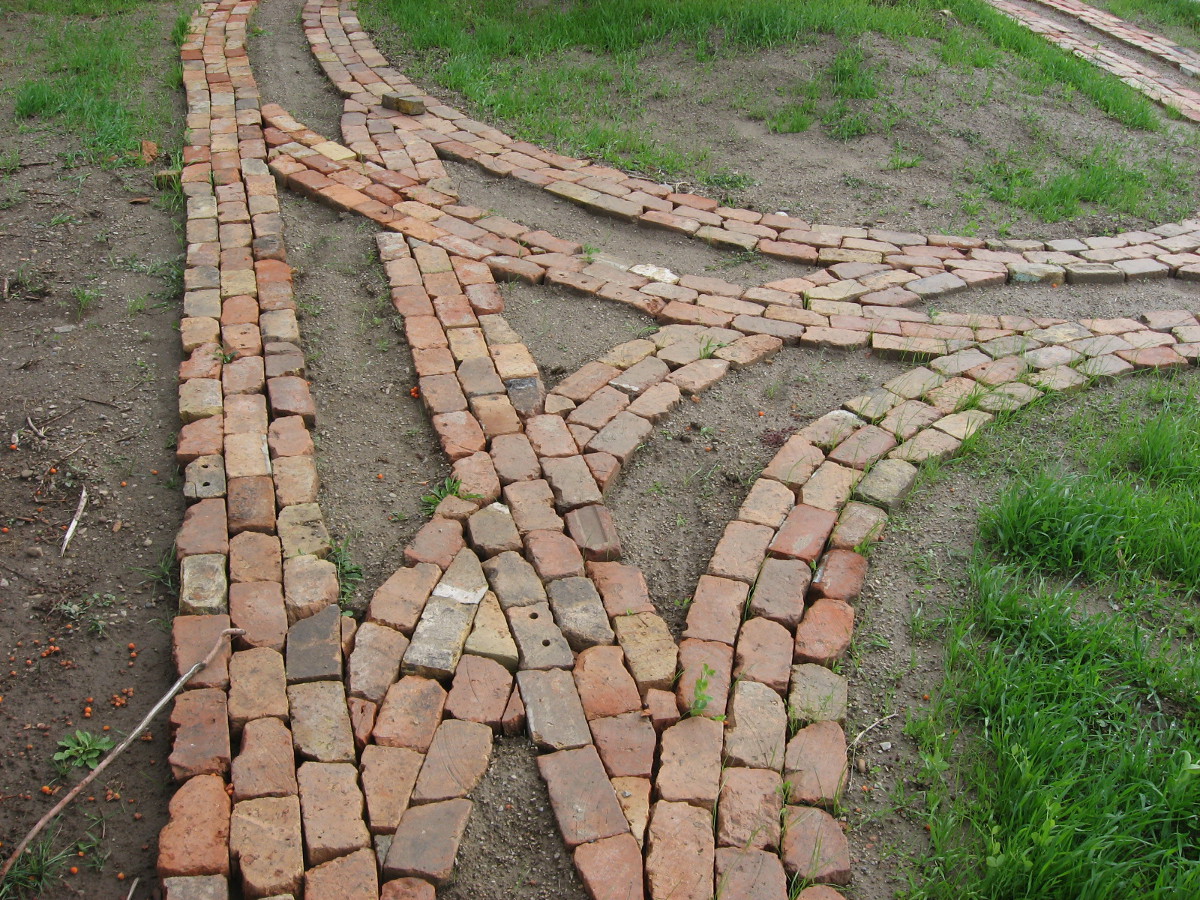
Sound paving brick can create a classic path. Ordinary soft building brick may absorb water and deteriorate in freezing climates, so identify the material before using it. Remove mortar, reject crumbling units, and set the brick over a properly compacted base with edge restraint.
6. Loose pebbles or pebble accents
Rounded pebbles offer color and texture. Used loose, they should form only a shallow finish layer over a stable base and remain inside strong edging. Because they roll, they are better for quiet secondary paths than carts, bicycles, or accessible routes.
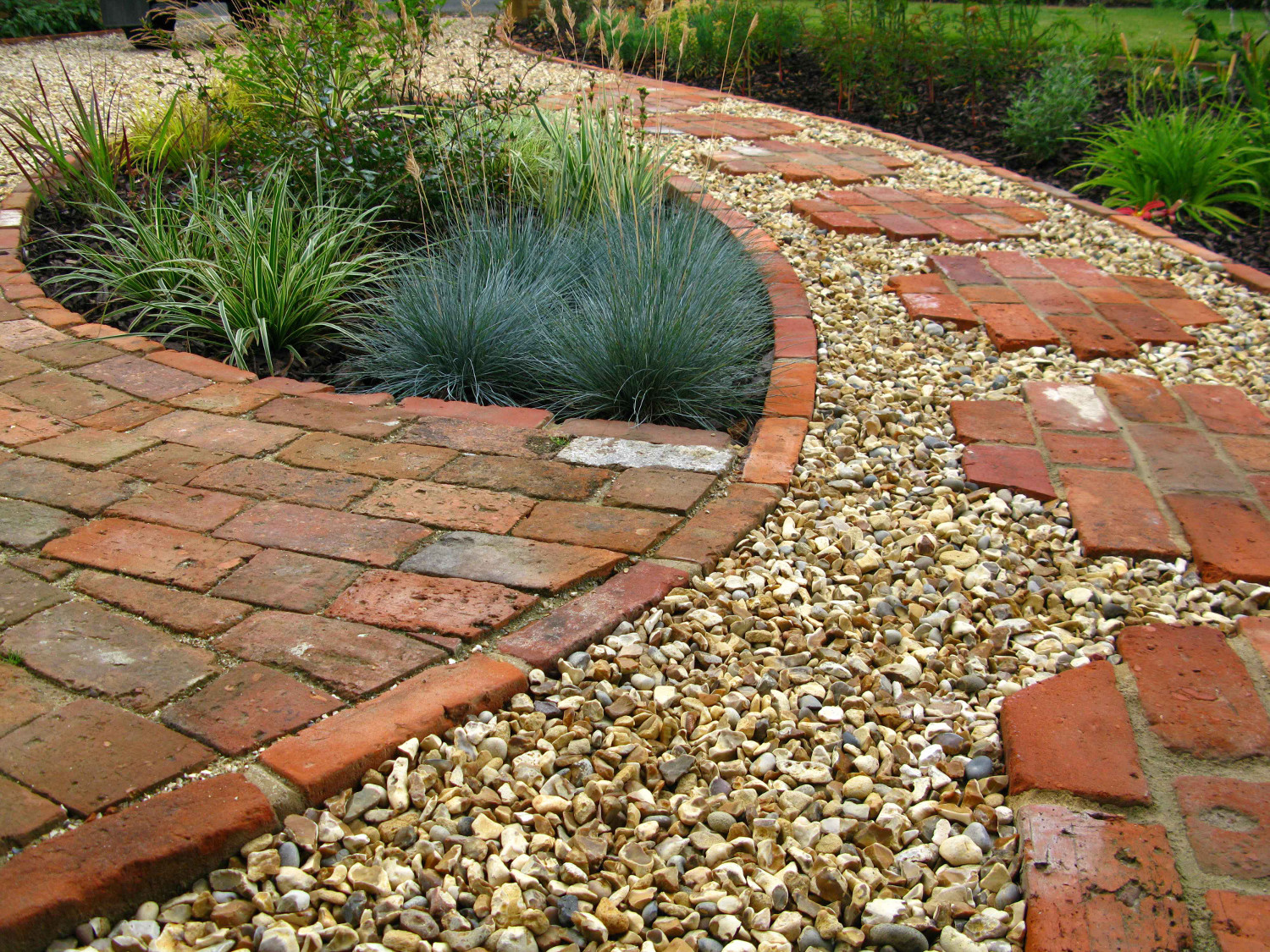
A small mosaic panel can become an inexpensive focal point when you already have suitable stone. Read how to build a pebble path or mosaic.
7. Boards, log rounds, and safe reclaimed wood
Wood can be economical when it comes from a known, sound source. Boards need structural support, drainage, slip awareness, and corrosion-resistant fasteners appropriate to the wood treatment. A boardwalk raised even slightly above grade must be stable and should not create concealed trip edges.
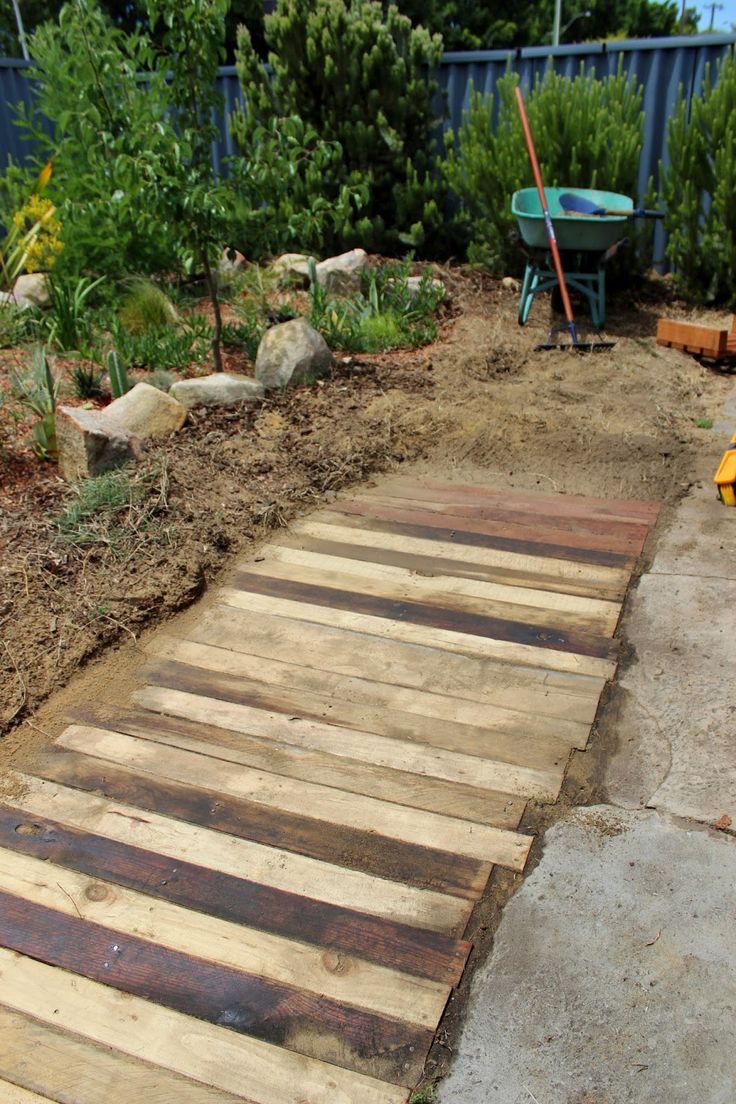
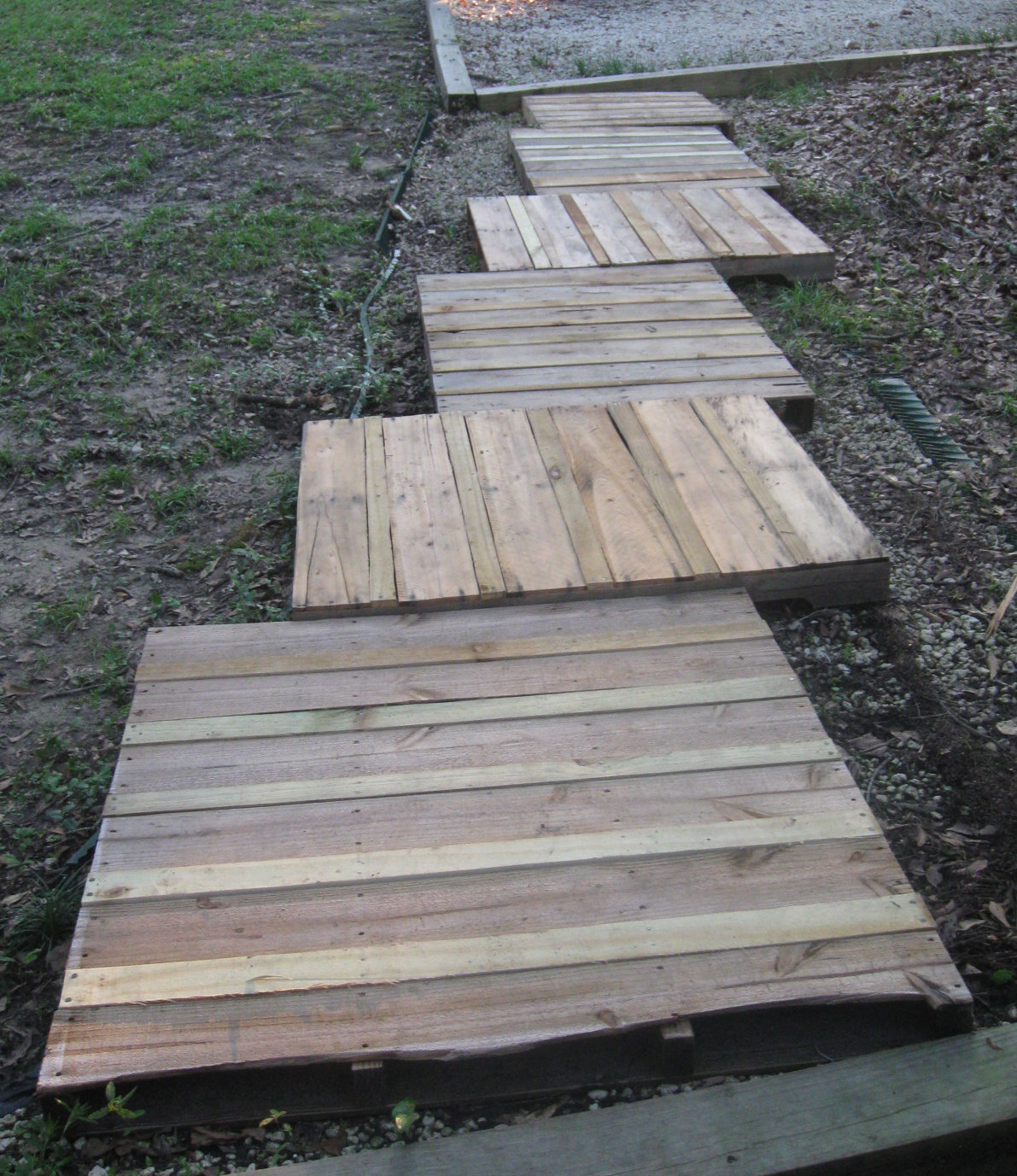
Pallets are often suggested as free paving, but they are rarely ready-made paths. Unknown treatments, damaged boards, protruding nails, insufficient structural capacity, and rapid decay can turn “free” material into a hazard. Use only clearly identified, heat-treated lumber in sound condition, dismantle it, remove all fasteners, and rebuild it as a properly supported walkway.
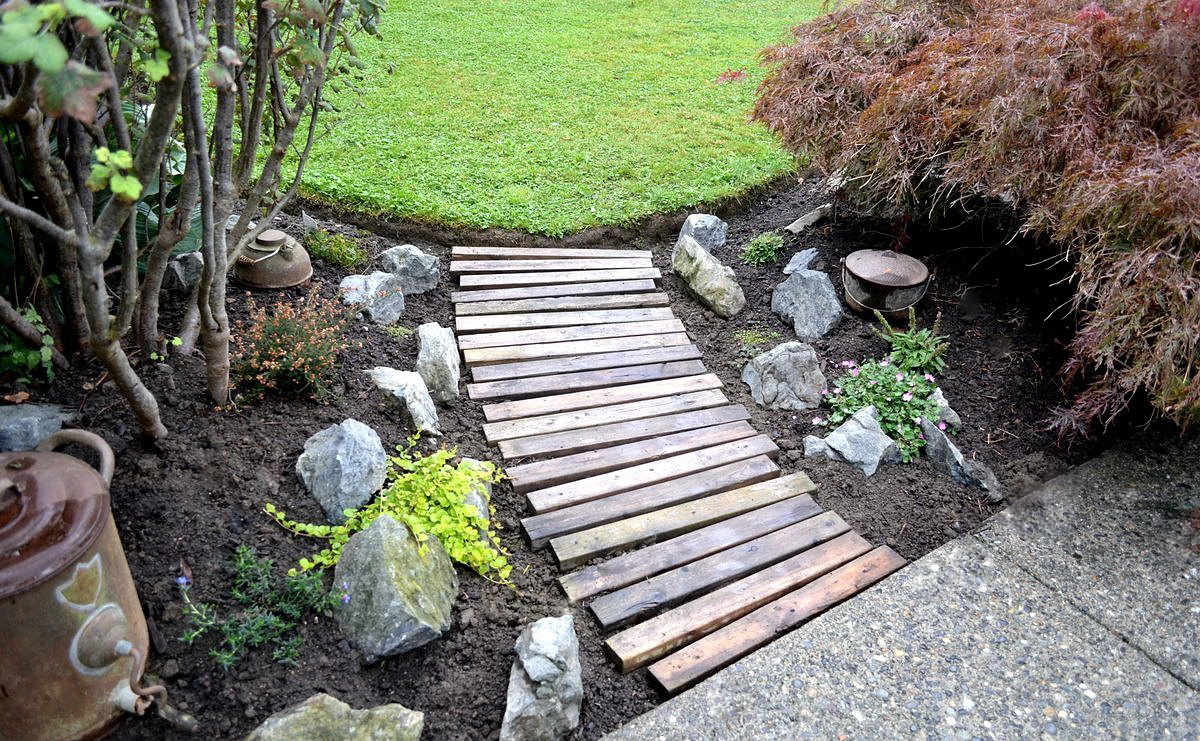
Round log slices create a charming woodland effect but eventually decay. Our wood-slice path guide explains safer material selection and installation.
8. Composite or recycled-material pavers
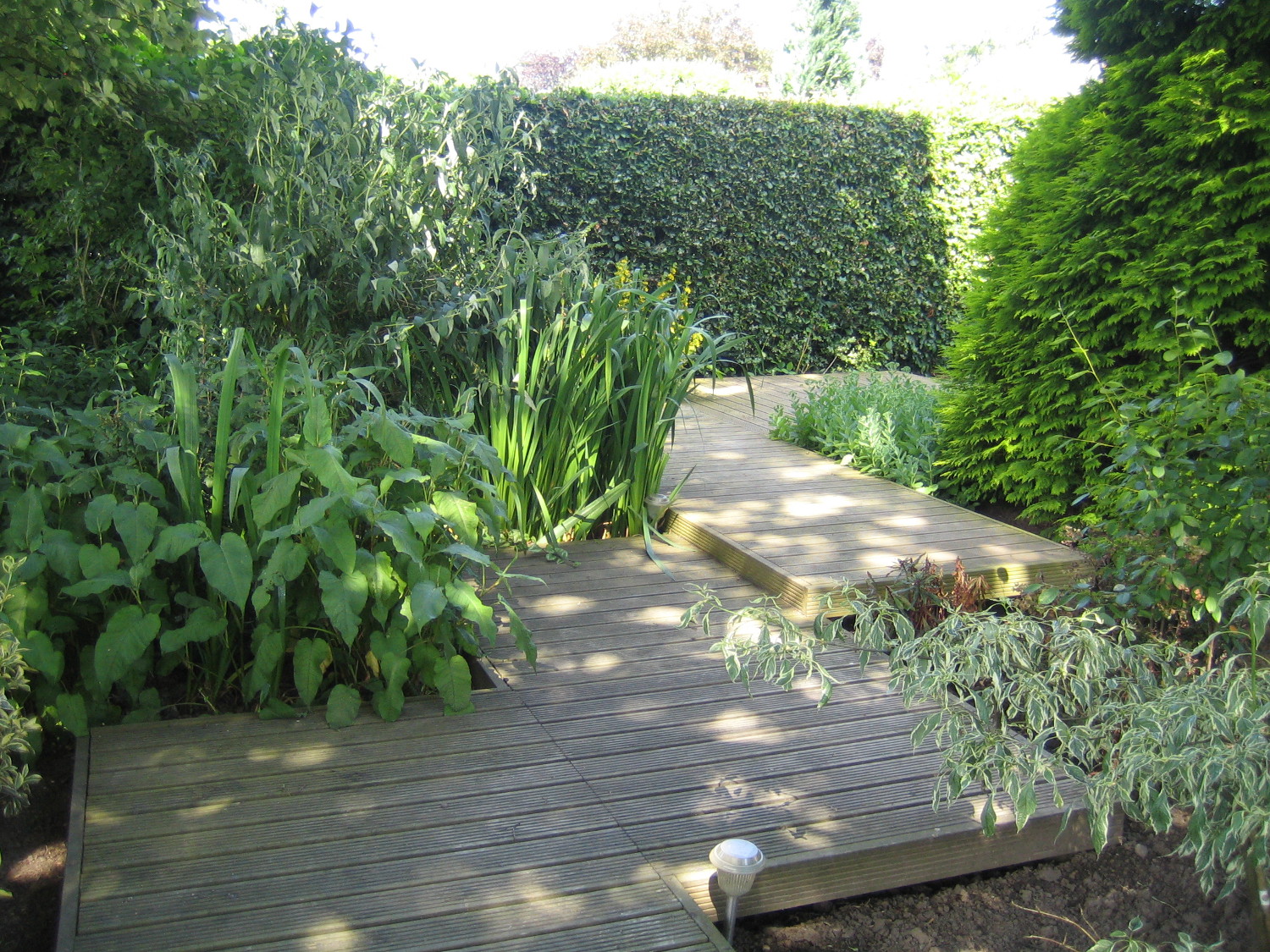
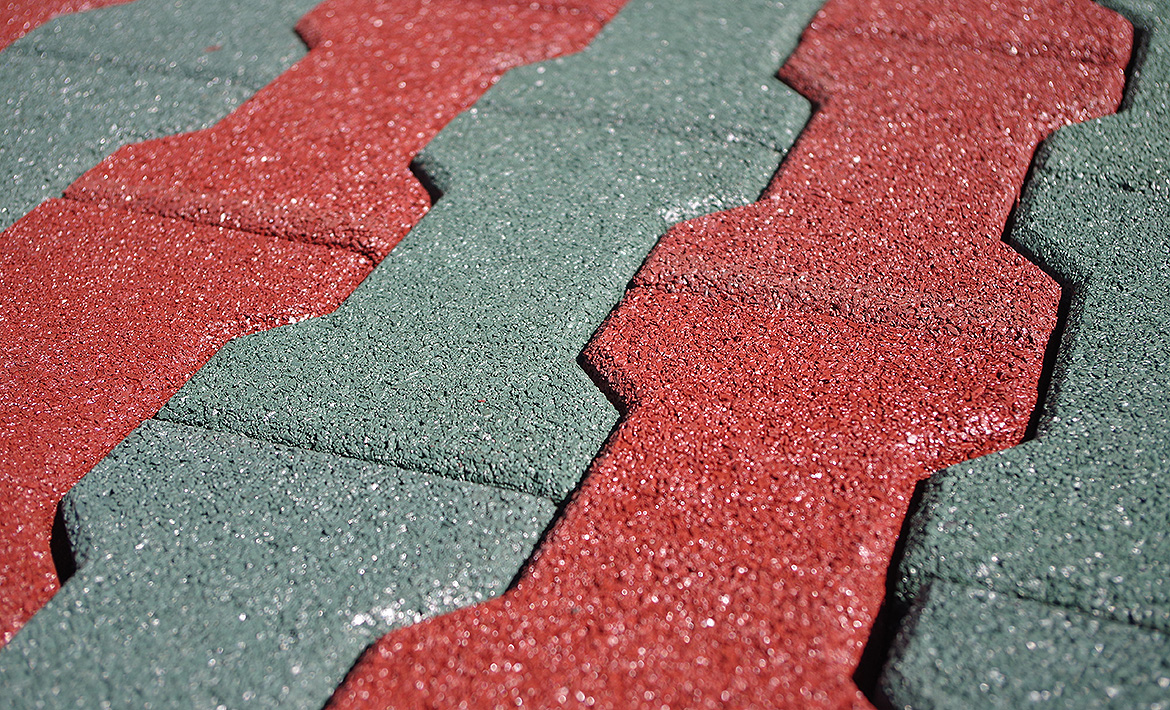
Composite decking tiles and recycled-rubber pavers can be quick to install on a compatible, firm base. They are not always the cheapest initial option, but sale or reclaimed stock may reduce the cost. Check the manufacturer’s requirements for drainage, temperature range, slip resistance, expansion gaps, accessibility, and permitted base materials.
What about cardboard?
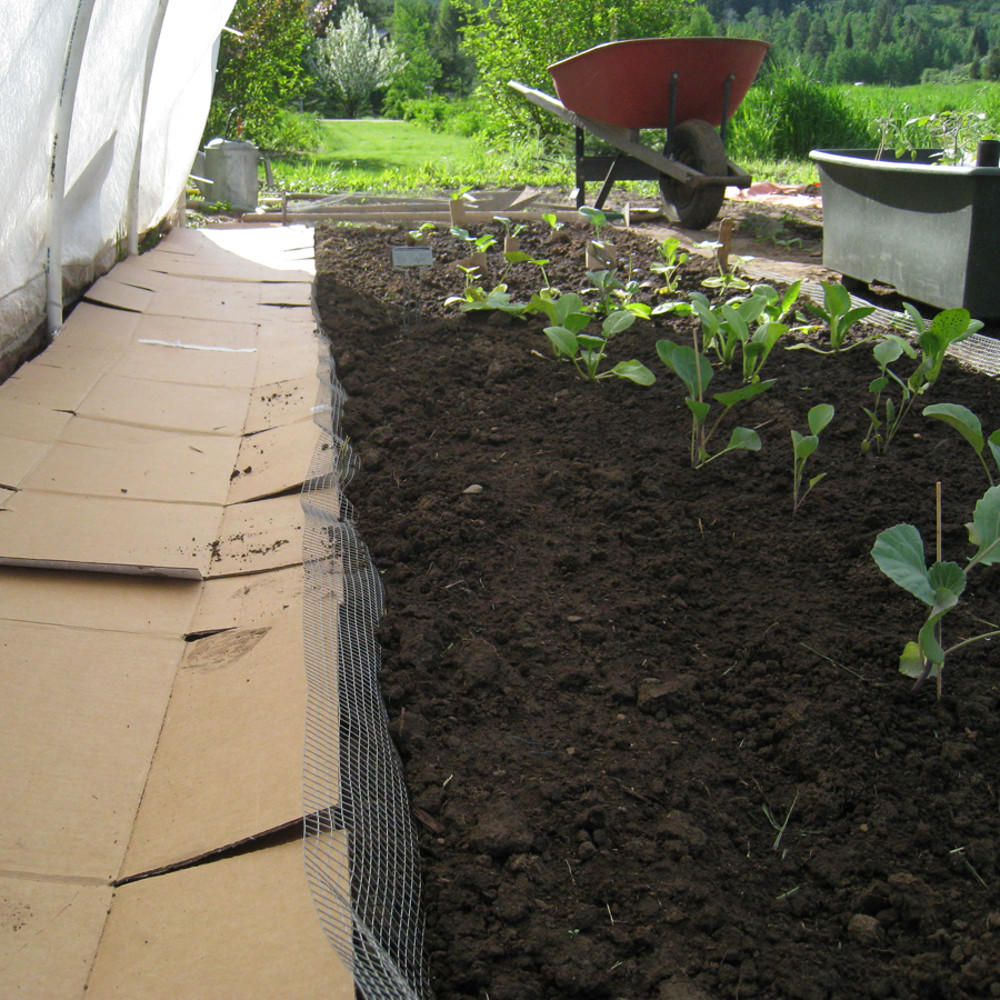
Cardboard is useful as a temporary sheet-mulch layer beneath coarse organic material in some garden situations, but it is not a durable walking surface. When wet it becomes soft and slippery; when dry it tears and lifts. Remove tape, glossy coatings, and staples, then cover plain cardboard immediately with a deep layer of chips if local conditions make sheet mulching appropriate.
Where not to cut costs
- Drainage: standing water destroys bases and makes organic surfaces muddy.
- Compaction: a loose base settles unevenly.
- Edging: loose stone spreads into beds and lawn.
- Material identification: avoid unknown treated wood, crumbly brick, sharp waste, and contaminated fill.
- Safety: wear suitable protective equipment and follow tool and product instructions.
A permeable separation layer can be worthwhile on weak soil, but it is not mandatory everywhere. Learn when geotextile belongs under a garden path.
Choose by total cost, not purchase price
The least expensive path is the one that matches its traffic and can be maintained without frequent rebuilding. Wood chips are excellent for a secondary path; compacted gravel suits everyday use; stepping stones save material in light traffic; and pavers make sense where a firm surface matters. Start with one short section, test it through wet weather, and extend the method only after it performs well.