Heucherella combines the colorful foliage of coral bells (Heuchera) with the spreading habit and delicate flower sprays associated with foamflower (Tiarella). This garden hybrid does not occur naturally, but breeders have produced many cultivars with deeply cut leaves, dark veins and colors ranging from lime green to bronze and burgundy.
It is a useful plant for brightening partial shade, edging a woodland path or filling a container. Good drainage and moderate moisture are far more important than constant feeding.
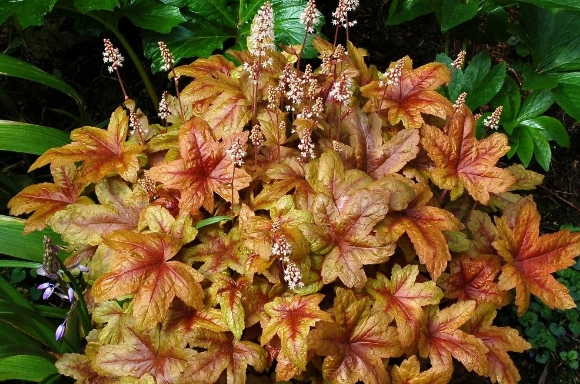
What is heucherella?
Heucherella is an intergeneric hybrid, often written × Heucherella, created from Heuchera and Tiarella. Most forms grow as compact clumps, while some have trailing stems that make effective groundcovers or spiller plants for containers. Slender flower wands appear from spring into summer, depending on the cultivar.
The foliage is the main feature. Leaf color often changes with temperature and light, so the same cultivar may look different in spring, midsummer and fall. Consult the cultivar label for mature size: a small mound and a vigorous trailing form should not be spaced in the same way.
How much sun does heucherella need?
Morning sun with afternoon shade is a reliable choice. Many cultivars also grow in bright, open shade. In cool climates, some tolerate more direct sun if soil moisture is dependable; in hot climates, strong afternoon sun can scorch or bleach the leaves.
Dark-leaved cultivars often keep stronger color with a little sun, while pale chartreuse foliage may need more protection. Observe the plant through the first season and move it during cool weather if the site clearly does not suit it.
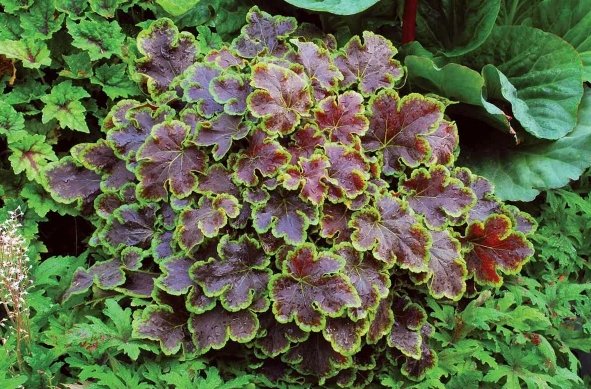
Soil and drainage
Plant in humus-rich soil that holds some moisture but drains freely. Waterlogged ground encourages crown and root rot, especially during winter. At the other extreme, very sandy soil may dry so quickly that leaf edges scorch. Compost improves both conditions when incorporated across the planting area.
A slightly acidic to neutral soil suits most cultivars. There is no need to add wood ash or lime unless a soil test shows that an adjustment is appropriate.
How to plant heucherella
- Water the pot before planting and loosen circling roots gently.
- Dig a hole a little wider than the root ball.
- Set the crown at soil level. Do not bury the central growing point.
- Backfill with the excavated soil, firm lightly and water thoroughly.
- Add a thin organic mulch around, but not over, the crown.
Spring or early fall is ideal. Give the plant enough time to root before severe heat or frozen soil. Space according to the listed mature width, usually around 12 to 24 inches (30–60 cm).
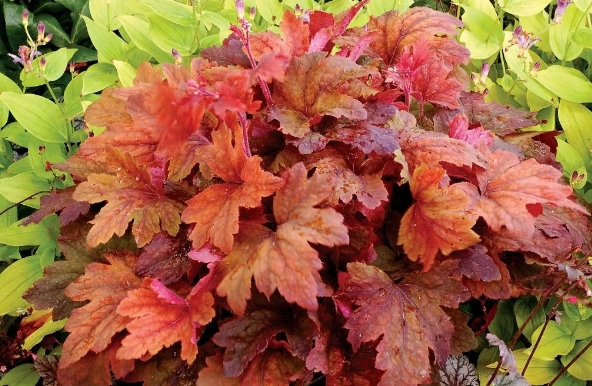
Watering and feeding
Keep the soil evenly moist during the first season. An established plant tolerates a short dry period, but prolonged drought causes crisp leaf margins and weak growth. Water at soil level when the upper inch begins to dry, then allow excess water to drain.
Heucherella is not a heavy feeder. A modest layer of compost in spring is often enough. In poor soil or containers, use a balanced slow-release fertilizer at the label rate. Heavy feeding, particularly with nitrogen, can produce soft growth and reduce cold tolerance.
Seasonal maintenance
Remove damaged foliage in early spring when new leaves begin to unfold. Cut spent flower stems at the base unless you enjoy their airy seed heads. Refresh mulch as needed, always keeping it away from the crown.
In cold climates, the foliage may remain partly evergreen beneath snow or may become ragged. Wait until winter extremes have passed before removing it; old leaves can provide some protection to the crown.
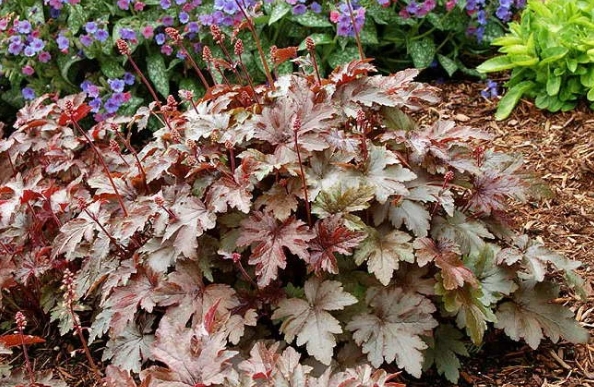
Dividing and renewing an older plant
After several years, the crown may rise above the soil, develop bare stems or lose vigor in the middle. Divide it in spring or early fall. Lift the clump, cut it into healthy sections with roots and leaves, discard woody or rotten material and replant the divisions with their crowns at soil level.
You can also lift and reset a plant that has heaved during freeze-thaw cycles. Add soil beneath the root ball rather than burying the growing point from above. Regular renewal keeps the foliage dense and colorful.
Good companions
Combine heucherella with ferns, hostas, sedges and spring bulbs for layers of contrasting leaf shape. It also enjoys the same moisture-retentive, partially shaded conditions as many astilbes; our guide explains how to divide astilbe when those clumps become crowded.
For the sunny side of a border, use a tougher flowering anchor such as the plants in our daylily planting and care guide. The contrast between broad daylily foliage and patterned heucherella leaves can tie the two light zones together.
Problems to watch for
Blackened or soft crowns usually indicate excessive moisture. Improve drainage and remove affected tissue. Vine weevil larvae can damage container-grown roots in regions where the pest occurs; leaf spotting and powdery mildew are more likely where air circulation is poor. Slugs may chew tender spring foliage.
Start with clean plants, avoid covering the crown, water the soil rather than the foliage and provide sensible spacing. Most heucherella problems are easier to prevent than to cure.
Quick answers
Is heucherella evergreen? It is evergreen or semi-evergreen in many climates, but severe cold or winter wet can damage the foliage.
Can it grow in full shade? Bright shade is suitable. Very dense shade may reduce leaf color and flowering, while hot afternoon sun may scorch pale cultivars.
How often should it be divided? There is no fixed schedule. Divide when the crown becomes woody, rises above the soil or loses vigor—often after several years.