Dry shade is one of the hardest conditions in a Texas landscape. The soil may look protected from the sun, but mature trees intercept rainfall and their roots compete aggressively for moisture. Add summer heat and alkaline soil, and many conventional ground covers fail within a season.
The good news is that several tough plants can cover bare soil without demanding constant irrigation. The best choices are adapted to Central Texas conditions, tolerate root competition, and recover from periodic drought once established. This guide compares dependable options and explains where each one works best.
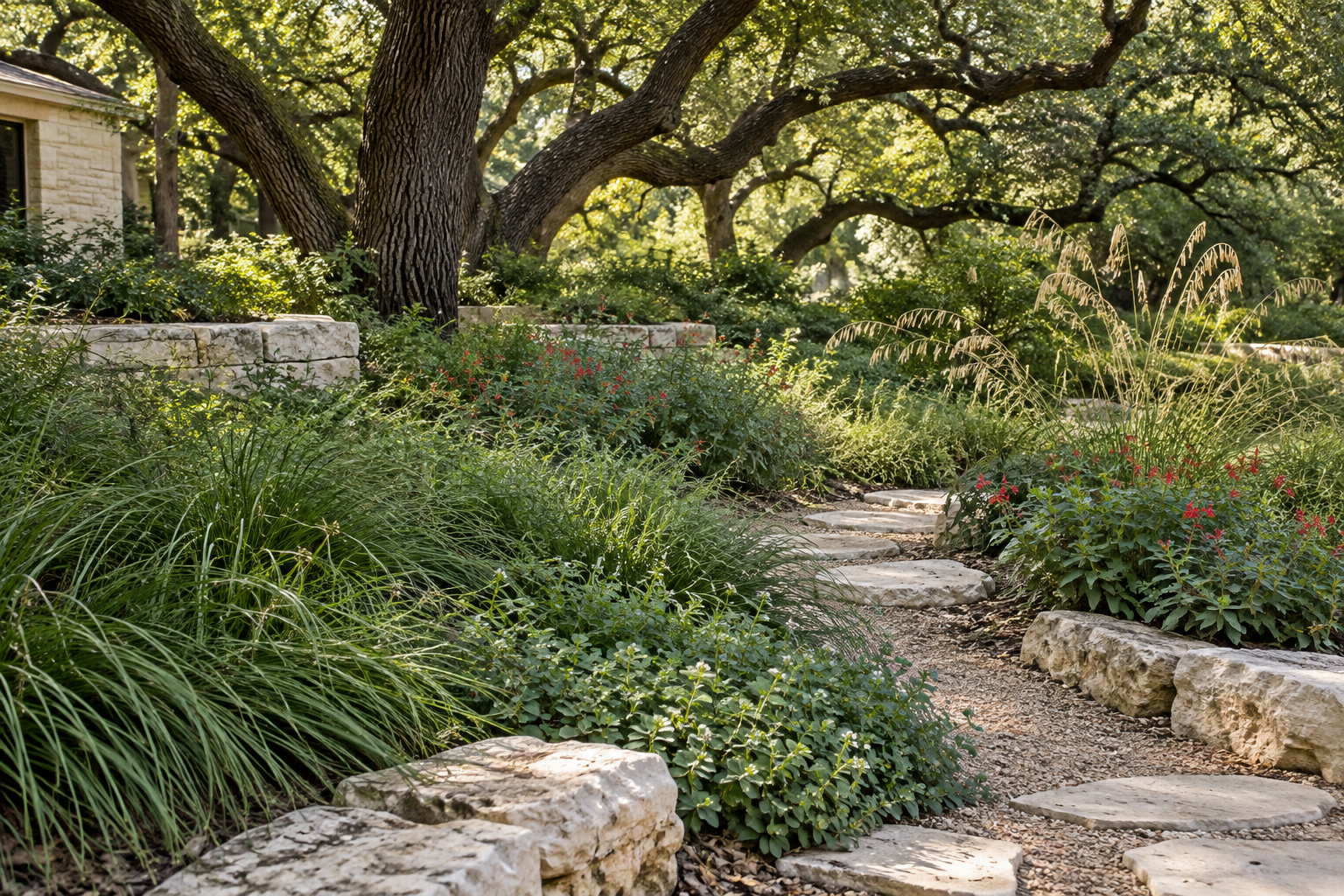
What “drought-tolerant shade” really means
Drought-tolerant does not mean a new planting can survive without water. Most ground covers need regular irrigation during their first growing season while roots spread into the surrounding soil. After establishment, the plants below can usually handle normal dry periods with occasional deep watering.
Light levels also matter. “Shade” can mean bright filtered light, a few hours of morning sun, or the dense darkness close to a live oak trunk. A plant that thrives at the edge of a canopy may thin out in deep shade. Before planting, watch the site at several times of day and divide it into light zones.
Best drought-tolerant ground covers for Texas shade
| Plant | Best light | Typical height | Foot traffic | Growth habit |
|---|---|---|---|---|
| Texas sedge | Part shade to shade | 6–12 in. | Light | Clumping, lawn-like |
| Horseherb | Part shade to shade | 3–8 in. | Moderate | Spreading |
| Cedar sage | Shade to filtered light | 8–18 in. | None | Reseeding colonies |
| Pigeonberry | Part shade to shade | 12–24 in. | None | Loose spreading colonies |
| Snakeherb | Part shade | 6–12 in. | Light | Low spreading perennial |
| Inland sea oats | Part shade to shade | 2–3 ft. | None | Dense, spreading grass |
| Frogfruit | Bright shade to sun | 3–6 in. | Moderate | Fast creeping mat |
| Cast iron plant | Deep shade | 18–30 in. | None | Slow clumps |
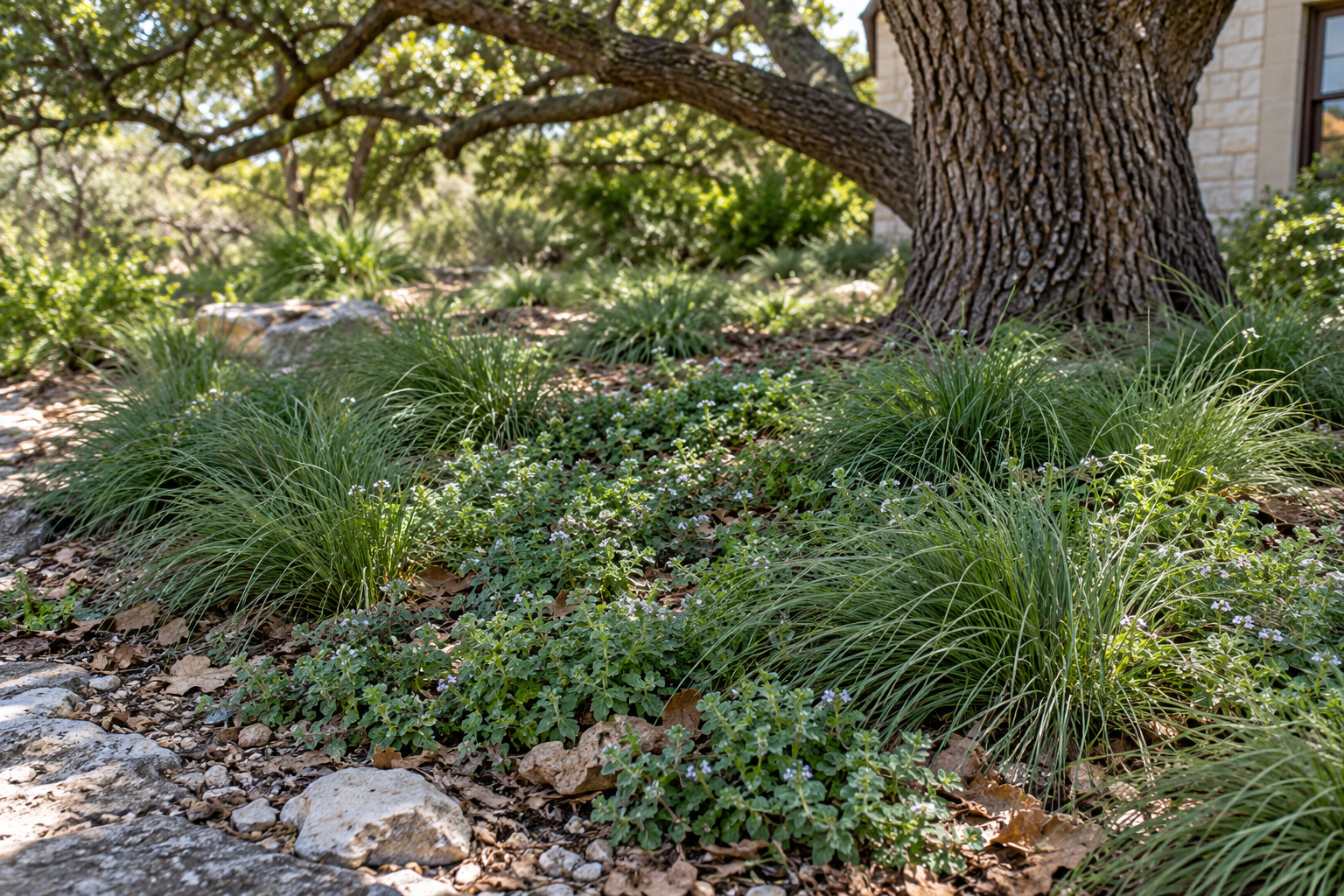
1. Texas sedge
Texas sedge (Carex texensis) is one of the most useful lawn alternatives for filtered shade. Its fine green blades form soft clumps that can be repeated across a large area. It looks natural under oaks and works especially well beside paths or between stepping stones.
For a meadow effect, install plugs 8 to 12 inches apart and let them knit together. Texas sedge accepts occasional mowing, but it is usually more attractive when left at its natural height. It tolerates dry soil after establishment, although a deep soak during extended summer drought keeps it greener.
2. Horseherb
Horseherb (Calyptocarpus vialis), also called straggler daisy, is a low native plant with small yellow flowers. In many Central Texas yards it arrives on its own, particularly beneath trees where turfgrass struggles. It spreads readily, tolerates mowing, and handles more foot traffic than most woodland plants.
Horseherb may go dormant and brown during drought, then return quickly after rain. That seasonal response is normal. It is a good choice for gardeners who can accept a relaxed, informal look rather than a uniformly green carpet all year.
3. Cedar sage
Cedar sage (Salvia roemeriana) is a Texas native known for vivid red spring flowers. It grows naturally in the filtered shade of junipers and deciduous trees. The foliage stays low, while flower stalks rise above it and attract hummingbirds.
This is not a walkable ground cover, but scattered plants can create a beautiful flowering layer among sedges, rocks, or leaf litter. Allow some seed heads to mature so the colony can renew itself.
4. Pigeonberry
Pigeonberry (Rivina humilis) produces delicate pink-and-white flowers followed by bright red berries. It prefers shade and gives a woodland garden color through much of the warm season. Birds use the fruit, and the plant often reseeds where conditions suit it.
Use pigeonberry in protected beds rather than in traffic areas. In cold weather or severe drought it may disappear above ground, but established plants commonly return from the roots when warmth and moisture return.
5. Snakeherb
Snakeherb (Dyschoriste linearis) is a low native perennial with narrow leaves and small purple flowers. It fits naturally along the brighter edges of a shade garden, in rock gardens, or mixed with sedges. Once rooted, it tolerates heat and dry periods better than many traditional flowering ground covers.
Because it is less commonly stocked than big-box landscaping plants, look for it at native-plant nurseries or seasonal plant sales.
6. Inland sea oats
Inland sea oats (Chasmanthium latifolium) is taller than a conventional ground cover, but it is excellent for covering broad shaded areas where a layered, naturalistic look is desired. Flat seed heads turn tan and remain ornamental into winter.
Give this plant room: it spreads by seed and rhizomes and can become assertive in irrigated beds. Use it on slopes, behind low plants, or in contained areas rather than beside delicate perennials.
7. Frogfruit
Frogfruit (Phyla nodiflora) forms a quick, low mat and supports small pollinators. It performs best in bright shade, dappled sun, or at the canopy edge; dense shade usually produces sparse growth. It tolerates occasional walking and can fill gaps between pavers.
Compared with plants for deep shade, frogfruit appreciates a little more water and light. Place it where roof runoff or the outer irrigation zone can provide occasional moisture without keeping the soil wet.
8. Cast iron plant
Cast iron plant (Aspidistra elatior) is not native to Texas, but it remains one of the most dependable choices for deep shade near a house or beneath a dense evergreen canopy. Its upright leaves form substantial clumps, stay evergreen in many protected Central Texas locations, and need little attention.
It spreads slowly, so it is best used as a structural accent or planted in groups rather than expected to cover a large yard quickly. Protect it from harsh afternoon sun, which can bleach or scorch the leaves.
How to choose the right plant for the site
Start with the function of the area. For a low surface that can accept light walking, horseherb, frogfruit, and Texas sedge are the strongest candidates. For an ornamental bed with no traffic, combine sedge with cedar sage and pigeonberry. Use inland sea oats where height and vigorous spreading are welcome, and cast iron plant in the darkest architectural spaces.
If the area is beneath mature trees, avoid tilling or adding a thick layer of new soil. Both practices can damage roots or reduce the oxygen they receive. Small plugs are safer than digging large planting holes. For more tree-specific ideas, see our guide to the best shade plants for Central Texas.
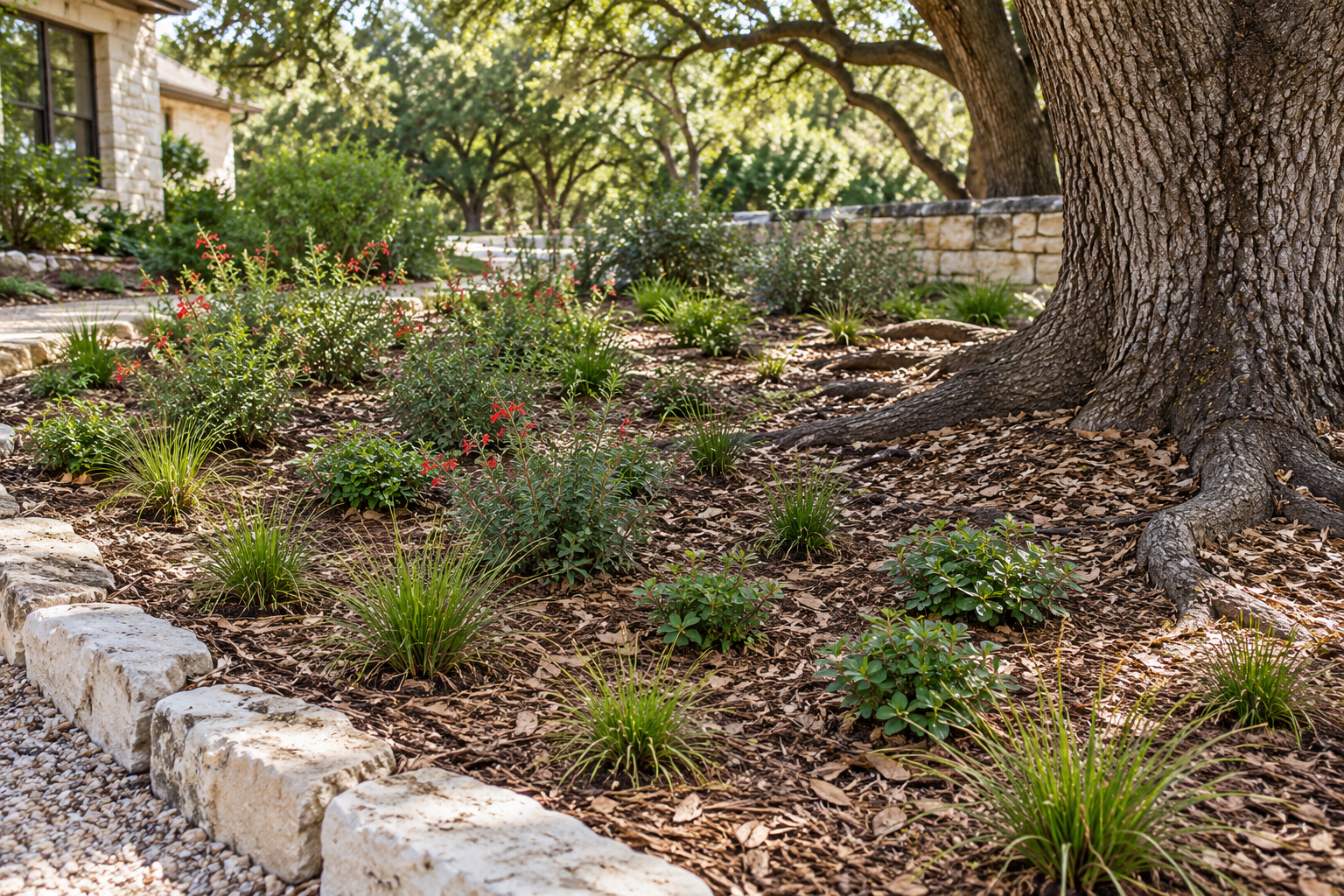
Installation and watering tips
- Plant in fall or early spring. Cool weather gives roots time to establish before summer.
- Use small plants. Plugs and one-quart pots require less root disturbance and usually adapt faster.
- Water deeply at first. Keep the root balls evenly moist for the first several weeks, then lengthen the interval between waterings.
- Mulch lightly. Apply 2 to 3 inches between new plants, but keep mulch away from tree trunks and plant crowns.
- Expect seasonal change. Native ground covers may thin, brown, or go dormant during drought or winter.
- Weed during establishment. Early weed control gives slow-spreading plants a chance to close gaps.
A simple planting combination
For a typical area beneath a deciduous tree, use Texas sedge as the main matrix, spacing plugs about 10 inches apart. Add groups of cedar sage and pigeonberry where they can be seen from a path. At the brighter outer edge, introduce frogfruit to create a lower transition toward lawn or paving. Leave a mulch-only zone close to the trunk rather than forcing plants into the driest, darkest spot.
Final thoughts
The most successful Texas shade garden does not try to imitate a high-maintenance lawn. It uses plants that match the available light and accepts natural cycles of dormancy and recovery. With the right ground cover, bare soil can become a resilient layer that protects the site, supports wildlife, and needs far less water than conventional turf.
For additional locally tested choices, consult the City of Austin Grow Green Plant Guide and the Lady Bird Johnson Wildflower Center’s Central Texas dry-shade collection.